A well-stocked car tool kit can turn an unexpected breakdown, flat tire, dead battery, or bad weather delay into a manageable inconvenience. The goal isn’t to carry a full garage—it’s to keep a focused set of basics that covers the most common roadside problems, stays easy to find, and still works months after you packed it.
What a “basic” car kit should help solve
A practical kit supports a few real-world scenarios that happen far more often than dramatic emergencies:
- Visibility and warning: making your vehicle easy to see and giving other drivers time to react.
- Mobility issues: flats, low tire pressure, loose lug nuts, and minor wheel-related problems.
- Power problems: a dead battery, phone battery drain, or a blown fuse.
- Minor repairs: loose clamps, broken zip ties, small leaks, and fastener issues.
- Personal comfort and safety: cold, heat, dehydration, and waiting for help.
- Information and communication: knowing who to call, what to say, and having backup contact options.
For general roadside safety guidance, review official recommendations from NHTSA and Ready.gov.
Safety and visibility essentials to keep within reach
When something goes wrong, your first job is to be seen and stay safe while you assess the situation. These items should be easy to grab without rummaging.
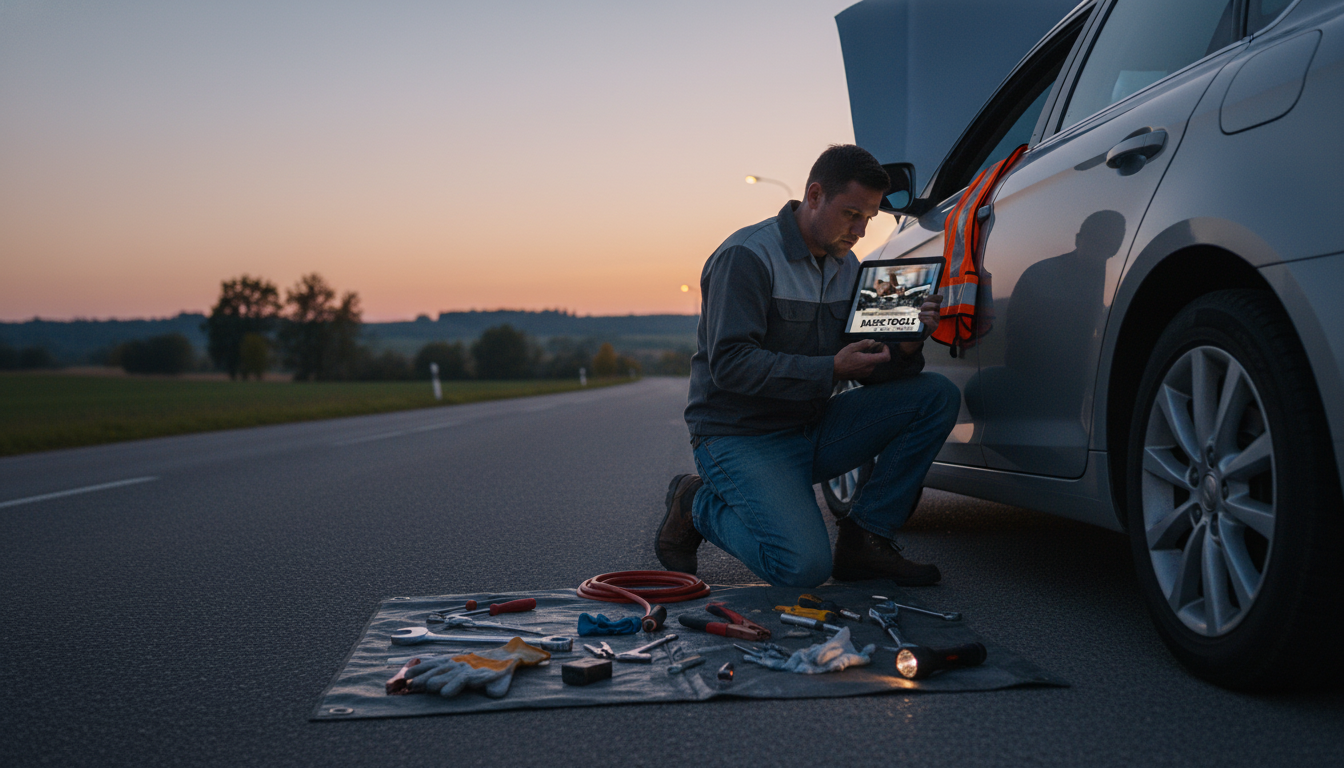
- Reflective triangles or LED road flares: place behind the vehicle to warn approaching traffic. Distance depends on speed, curves, rain/fog, and shoulder space.
- High-visibility vest: put it on before stepping out, especially at night or on narrow shoulders.
- Bright flashlight or headlamp: a headlamp keeps both hands free for tire changes and inspections.
- Work gloves: protect hands from sharp debris, hot components, and freezing metal tools.
- Seatbelt cutter and glass breaker (in the cabin): useful if a belt jams or doors won’t open after an impact.
| Item |
Best place to store |
Why it matters |
| High-visibility vest |
Driver door pocket |
Accessible before exiting |
| Headlamp/flashlight |
Center console |
Immediate light for hazards and repairs |
| Warning triangles/flares |
Trunk side compartment |
Fast setup after stopping |
| Gloves |
Glove box |
Quick protection for roadside tasks |
Tire and wheel basics for common roadside problems
Tires cause a large share of roadside headaches. A “basic” setup helps you confirm what’s wrong, add air, or safely swap a wheel if needed.
- Spare tire, jack, and lug wrench: verify they’re present, fit your vehicle, and can be accessed without unloading the entire trunk. Practice locating the jack points.
- Tire pressure gauge: don’t guess—check monthly and before road trips. (Tire pressure often drops with temperature swings.)
- Portable inflator (12V) or compact air compressor: ideal for slow leaks and “low tire” warnings.
- Tire plug kit (tread punctures only): a temporary fix to stop air loss long enough to reach a shop. Follow the kit instructions and get the tire inspected promptly.
- Wheel chocks (or a sturdy substitute): reduces rolling risk when lifting with a jack, especially on slight slopes.
- Small kneeling pad or folded tarp: keeps knees and clothing dry while working on wet gravel or snowmelt.
If you’ve never changed a tire, a quick dry run at home removes a lot of stress. Knowing where the tools are and how they fit matters as much as owning them.
Battery, power, and electrical items worth carrying
Electrical failures can strand you even when the car is otherwise fine. A few compact items can keep you moving—or at least keep you connected.
Hand tools and quick-fix supplies for minor issues
Comfort, weather, and “waiting safely” supplies
- Blanket or compact sleeping bag: cold becomes dangerous quickly if the car can’t run heat.
- Water and shelf-stable snacks: rotate regularly and choose items that tolerate temperature swings.
- Basic first-aid kit: bandages, antiseptic wipes, gauze, and personal medical essentials. Cross-check a recommended list from the American Red Cross.
- Rain poncho and warm hat: simple layers make roadside tasks safer and less miserable.
- Sunscreen and insect repellent (seasonal): helpful for long waits in warm months.
- Whistle: an easy way to signal for help if your voice is strained or conditions are loud.
A simple organization system that keeps the kit usable
A ready-to-download guide for building the kit step by step
FAQ
What are the most important tools to keep in a car for emergencies?
Start with visibility (vest, warning triangles/flares, light), tire support (spare setup, gauge, inflator), and power (jumper cables or a jump pack). Round it out with a few basic hand tools plus first aid and weather items in case you have to wait.
How often should a car emergency kit be checked or replaced?
Check tire-related items monthly (including spare pressure) and before road trips. Recheck lights and jump packs every few months, rotate food/water quarterly, and replace expired first-aid supplies immediately.
Should a jump starter replace jumper cables?
A jump starter is convenient because it doesn’t require another vehicle, but jumper cables are still a helpful backup and can let you assist someone else. If space allows, carrying both covers more scenarios.
Recommended for you





Leave a comment