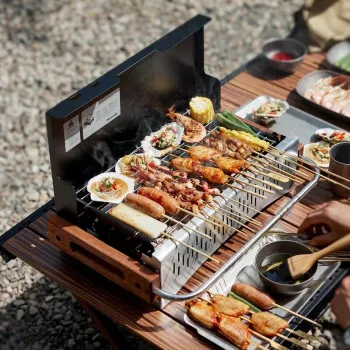
A portable charcoal grill should be easy to carry, quick to set up, and stable enough for real cooking—not just warming snacks. This folding design is built for outdoor meals where space is limited but flavor still matters. Whether you’re cooking at a campsite, setting up at a park, or squeezing into a picnic-table cook space, a compact charcoal grill can deliver that familiar sear and smokiness without dragging along a full-size kettle.
This style of folding charcoal grill is made for outdoor cooking on trips, day outings, and small gatherings where portability is the priority. It’s meant to travel easily, pack into a trunk, and tuck into a campsite gear bin without taking over your storage space.
Charcoal is the main draw here: it delivers a high-heat cooking surface that’s excellent for quick, satisfying meals. Think burgers, hot dogs, kebabs, sliced vegetables, and smaller cuts that cook fast. For long, low-and-slow barbecue sessions, a larger setup with better insulation and longer burn capacity typically makes more sense—but for weeknight-style grilling in the outdoors, compact charcoal is right at home.
If you’re building a simple outdoor kit, these in-stock options pair well with campsite and park cooking:
The biggest advantage of a folding grill is reduced bulk. A collapsible structure is easier to transport, easier to store between trips, and less awkward to load alongside tents, coolers, and camp chairs. For apartment dwellers and occasional grillers, it also keeps storage simple—no large, round grill body to stash in a closet or garage corner.
Because the footprint is compact, this type of grill can work well on picnic tables or on flat ground, as long as you use a heat-safe barrier underneath and keep it away from edges and foot traffic. In general, stability matters as much as size: a secure setup is safer, easier to cook on, and less likely to shift when flipping food or moving tools.
Compact charcoal grills are built for efficient cooking, not endless surface area. The benefit is that charcoal can get hot quickly and deliver excellent browning on thinner meats and fast-cooking foods. To make the most of that heat, it helps to cook with intention rather than trying to treat the grill like a full backyard station.
One of the most reliable techniques is two-zone cooking: bank coals to one side for high heat and leave the other side cooler. You can sear on the hot side, then slide food over to finish without burning. Outdoors, wind can push temperatures up or down unexpectedly, so using a natural windbreak (like positioning near a vehicle or a rock wall) can help stabilize heat—never grill in tents, vehicles, or enclosed areas.
| Goal | Charcoal Setup | Simple Tip |
|---|---|---|
| Fast sear | Single layer + small mound in center | Preheat grate before adding food |
| Two-zone cooking | Coals banked to one side | Move food to cooler side to avoid flare-ups |
| Longer cook (small items) | Even layer, add small amounts over time | Keep lid/wind exposure consistent when possible |
| Less smoke/flare | Moderate coal bed | Trim excess fat; avoid dripping marinades |
Start with placement. Choose a stable, non-flammable surface and avoid dry grass, leaf litter, and soft ground that can shift under weight. If you’re using a picnic table, protect the surface with a heat-safe barrier (like a grill mat rated for high temperatures or a properly sized metal tray) and keep plenty of clearance from the table edges.
Charcoal grilling is strictly an outdoor activity in well-ventilated areas. Using charcoal indoors, in tents, or in enclosed spaces can cause carbon monoxide exposure, which can be fatal. The CDC provides clear prevention guidance on carbon monoxide risks here: CDC — Carbon Monoxide Poisoning Prevention.
Keep a clear zone around the grill and have water nearby for safety and quick response. It also pays to check local fire restrictions, especially during dry seasons, since some parks and regions prohibit charcoal use. For additional best practices, review NFPA — Grill Safety, and when you’re cooking outdoors, follow Leave No Trace principles for waste and ash disposal: Leave No Trace — Dispose of Waste Properly.
Yes if the table surface is stable and protected with a heat-safe barrier. Keep the grill well away from edges and never place it directly on plastic or painted surfaces that can scorch.
Cook when coals are mostly ashed over and giving off steady heat instead of thick smoke. Timing varies based on charcoal type, how much you used, and wind conditions.
Let ashes cool completely, then place them in a metal container or approved receptacle and follow campsite or park guidance. Pack out ash when required and never dump hot coals.





Leave a comment