Mental Wellness Boost Checklist: A Daily Self-Care Planner for Stress, Balance, and Better Days
A simple daily structure can make self-care feel doable, even on busy or low-energy days. When stress is high, the hardest part is often deciding what to do first—so it helps to break mental wellness into small, trackable actions. A short checklist can help you notice stress signals earlier, keep routines realistic, and see progress without chasing perfection.
What a “mental wellness boost” looks like in real life
A mental wellness boost isn’t a dramatic overhaul. Most days, it’s a few practical choices that steady your system and reduce the chance that stress silently stacks up.
- Steady the nervous system: prioritize the basics—sleep, nourishment, movement, and brief pauses before tension becomes overwhelm.
- Create clarity with quick check-ins: track mood, energy, and stress in under a minute so patterns don’t get missed.
- Reduce decision fatigue: pre-select a small list of repeatable self-care options you can rotate through.
- Choose consistency over intensity: a 5-minute reset done daily often beats occasional big efforts that are hard to repeat.
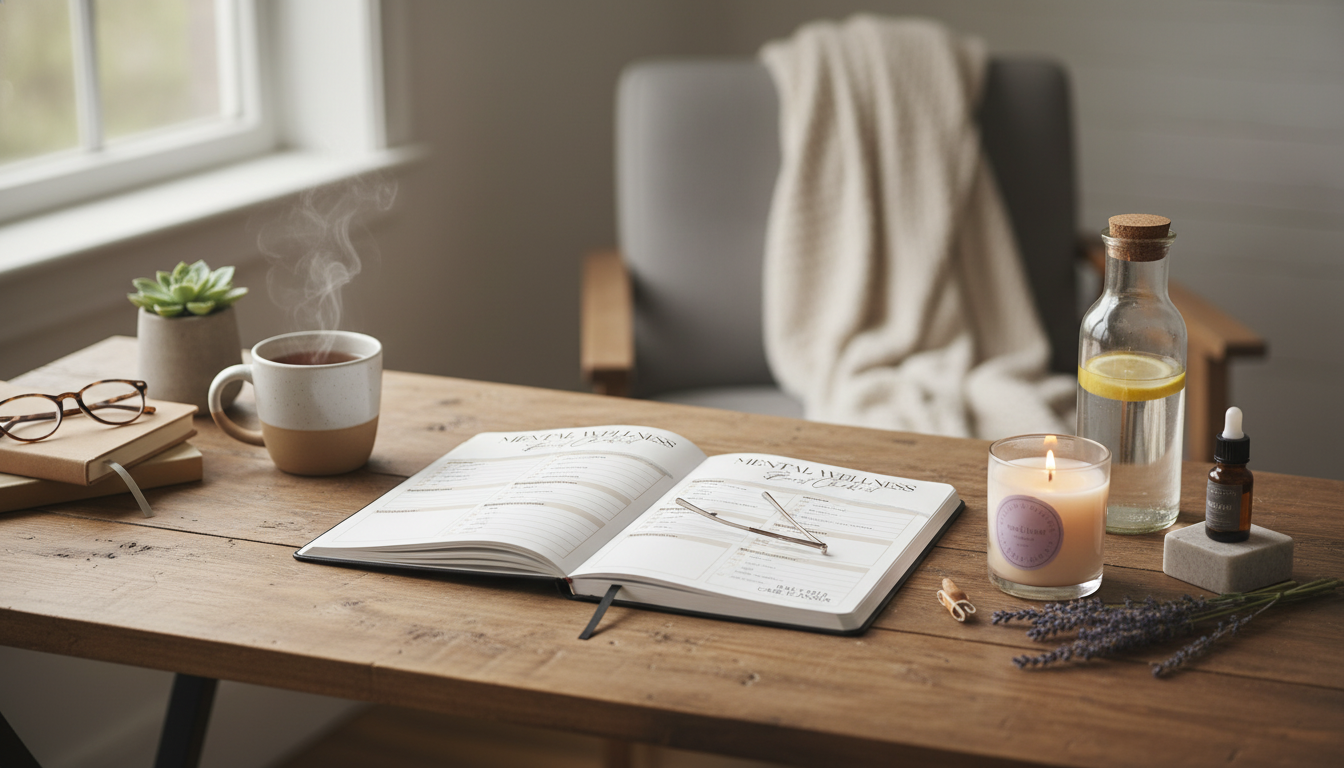
If you want a ready-made structure, Your Mental Wellness Boost Checklist | Daily Self-Care Planner, Stress & Balance Tracker, Top 10 Tips to Maintain Your Mental Health is designed for quick check-ins, small action steps, and simple tracking—especially on days when motivation is low.
A daily checklist that fits different kinds of days
The goal is not to “do it all.” It’s to do one or two supportive things on purpose, based on what your body and brain can realistically handle today.
Step 1: a 30-second scan
- Stress level: 1–10
- Energy: low / medium / high
- Mood: one word (e.g., “flat,” “wired,” “hopeful,” “irritable”)
Step 2: choose one body-based action and one mind-based action
- Body-based options: water, protein snack, stretch, short walk, step outside for light.
- Mind-based options: breathing, journaling, a boundary, reaching out to someone safe.
Step 3: add one “tiny win” task for momentum
- Reply to one email or text
- Clear one surface (desk, nightstand, kitchen counter)
- Schedule one appointment you’ve been avoiding
If clutter or household stress is a major trigger, pairing a wellness routine with a simple home plan can help. The Smart Parent’s Bundle to Get Help with Cleaning: 3-in-1 Guide for Fun and Easy Household Chores can support calmer days by turning “everything is a mess” into smaller, more manageable steps.
Step 4: end with a closure ritual (2 minutes)
- What helped today? (one thing)
- What drained me? (one thing)
- One adjustment for tomorrow: (keep it small—“eat lunch,” “short walk,” “no news before 10”)
Daily self-care menu: choose 1–3 options based on time and energy
| Time available |
Low energy options |
Medium energy options |
High energy options |
| 2–5 minutes |
Drink water + 5 slow breaths |
Step outside for fresh air |
Quick tidy of one small area |
| 10–15 minutes |
Warm shower or face wash + calming music |
Gentle stretch or short walk |
Phone-free break + short journal entry |
| 20–30 minutes |
Guided meditation or body scan |
Meal prep a simple snack/meal |
Workout, longer walk, or creative hobby time |
Stress & balance tracking that actually helps
Tracking becomes useful when it stays simple. The point isn’t to log every feeling—it’s to catch patterns early and make one small change before you hit burnout.
- Track patterns, not perfection: jot what happened before a stress spike (poor sleep, skipped meals, conflict, too much screen time).
- Use a green/yellow/red signal: green = steady, yellow = strained, red = overwhelmed.
- Add one daily protective factor: social connection, movement, nature, meaningful activity, or intentional rest.
- Review weekly: identify the top 1–2 triggers and test one boundary or support step next week.
For additional evidence-based guidance on coping strategies, see resources from the National Institute of Mental Health and the American Psychological Association.
Top 10 practical tips to maintain your mental health
- Keep sleep and wake times as consistent as possible.
- Eat and hydrate on a schedule to prevent energy crashes that can mimic anxiety.
- Move daily in a way that feels accessible (walking counts).
- Do one short breathing reset: inhale 4, exhale 6 for 2 minutes.
- Limit doomscrolling with a simple rule (no news before breakfast, or use a set timer).
- Name the feeling to tame it: one emotion word + one need (rest, support, clarity, space).
- Create “minimum viable self-care” for hard days (wash face, water, meds, 5 minutes outside).
- Build micro-connections: text someone, sit near people, or attend a class/community space.
- Reduce overwhelm with a 3-item priority list (must do, should do, could do).
- Ask for help early—support works best before burnout hits.
Using a planner to make routines stick (without guilt)
A ready-to-use checklist and tracker option
One option is Your Mental Wellness Boost Checklist | Daily Self-Care Planner, Stress & Balance Tracker, Top 10 Tips to Maintain Your Mental Health, which is built to help you select small daily actions, track stress and balance, and stay consistent without turning self-care into another stressful task.
FAQ
What should be included in a daily mental wellness checklist?
Include a fast mood/energy check, one body-based support (sleep, hydration, food, movement), one calming skill (breathing, grounding, journaling), one connection or support step, and a brief end-of-day note on what helped.
How do you track stress without overthinking it?
Use a 1–10 scale or a green/yellow/red rating once per day, then jot one trigger and one helpful action. Review weekly for patterns instead of trying to analyze every moment.
When should someone seek professional support for stress or anxiety?
If symptoms persist for weeks, interfere with sleep, work, or relationships, feel unmanageable, or include thoughts of self-harm, reach out to a licensed professional. In urgent situations, contact local emergency services or a crisis hotline.
Recommended for you






Leave a comment