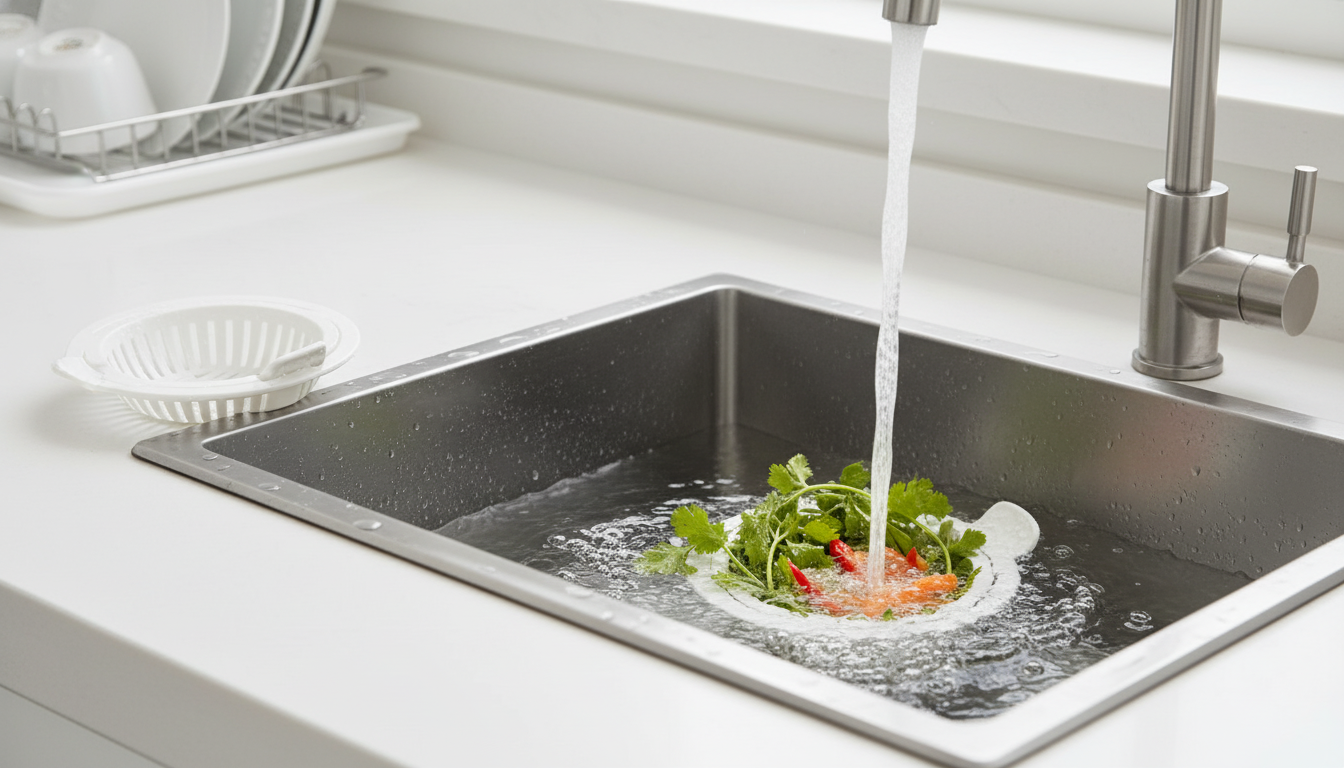
A busy sink collects scraps, peels, packaging, and dripping sponges all at once—making clogs and mess more likely. A dry-wet separation filter basket with a drain rack keeps food waste contained, lets water drain quickly, and creates a small landing zone for wet tools so the sink area stays tidy between cleanups.
Even small habits—like scraping plates before rinsing—add up. Keeping solids out of the plumbing helps reduce the “mystery slow drain” problem, while also cutting down on the damp, sticky sink ledge that can attract odors. (And for anything greasy, it’s still best practice to keep fats, oils, and grease out of drains; the EPA notes these are a major cause of sewer issues: EPA.)
| Feature | Why it helps | What to check |
|---|---|---|
| Drain holes / filter slots | Reduces standing water and odor | Holes small enough to catch rice/peels; drains fast |
| Dry-wet separation area | Makes disposal cleaner and less drippy | Clear divider or distinct compartments |
| Drain rack surface | Keeps sponge/brush from sitting in water | Slight slope or openings for runoff |
| Stable placement | Prevents slipping when scraping plates | Secure lip, hook, or friction points |
| Easy-clean design | Cuts down on grime buildup | Smooth surfaces; quick rinse; no hard-to-reach corners |
For food safety basics—especially after handling raw proteins—keeping cleanup tools drier and changing them out regularly matters. The USDA’s food safety guidance reinforces the importance of cleanliness and avoiding cross-contamination: USDA FSIS.
A simple placement tweak can make the whole station feel “built in.” If the rack is angled toward the basin and the filter section is within easy reach, the sink stays more functional during the busiest parts of cooking.
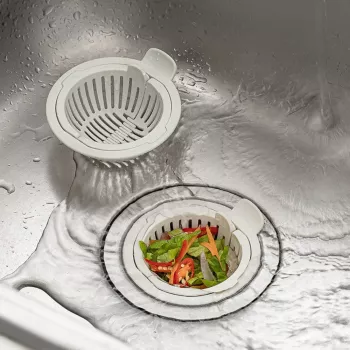
If the goal is a cleaner sink without a complicated setup, the Multifunction Kitchen Sink Filter Basket with Dry-Wet Separation & Drain Rack is a practical, budget-friendly upgrade. It’s designed to collect sink-side scraps while allowing water to drain away, and the separation area helps keep disposal less drippy. The integrated rack also gives sponges and small brushes a place to drip between uses—so the counter stays drier.
| Item | Details |
|---|---|
| Name | Multifunction Kitchen Sink Filter Basket with Dry-Wet Separation & Drain Rack |
| Price | $6.01 USD |
| Availability | In stock |
| Product page | View product |
For a structured approach that supports quick, repeatable resets, pair the sink setup with Clean Faster, Stay Calm – A Stress-Free Speed Cleaning Guide for Busy Homes. A small tool plus a simple routine is often the difference between “always behind” and “back to neutral” after meals.
No— it significantly reduces solids entering the drain, but grease/oil and very fine particles can still build up over time. Avoid pouring fats, oils, and grease down the sink, and maintain a basic drain-care routine for best results.
Empty it daily (or after each dish session) and rinse well. Wash with dish soap several times per week, and clean more often if it collects raw meat juices or strong-smelling scraps.
Avoid hot oil/grease, large hard items like bones and pits, and harsh chemical cleaners that could damage the material. If you have a disposal, don’t use the basket to funnel items that could jam the unit.





Leave a comment