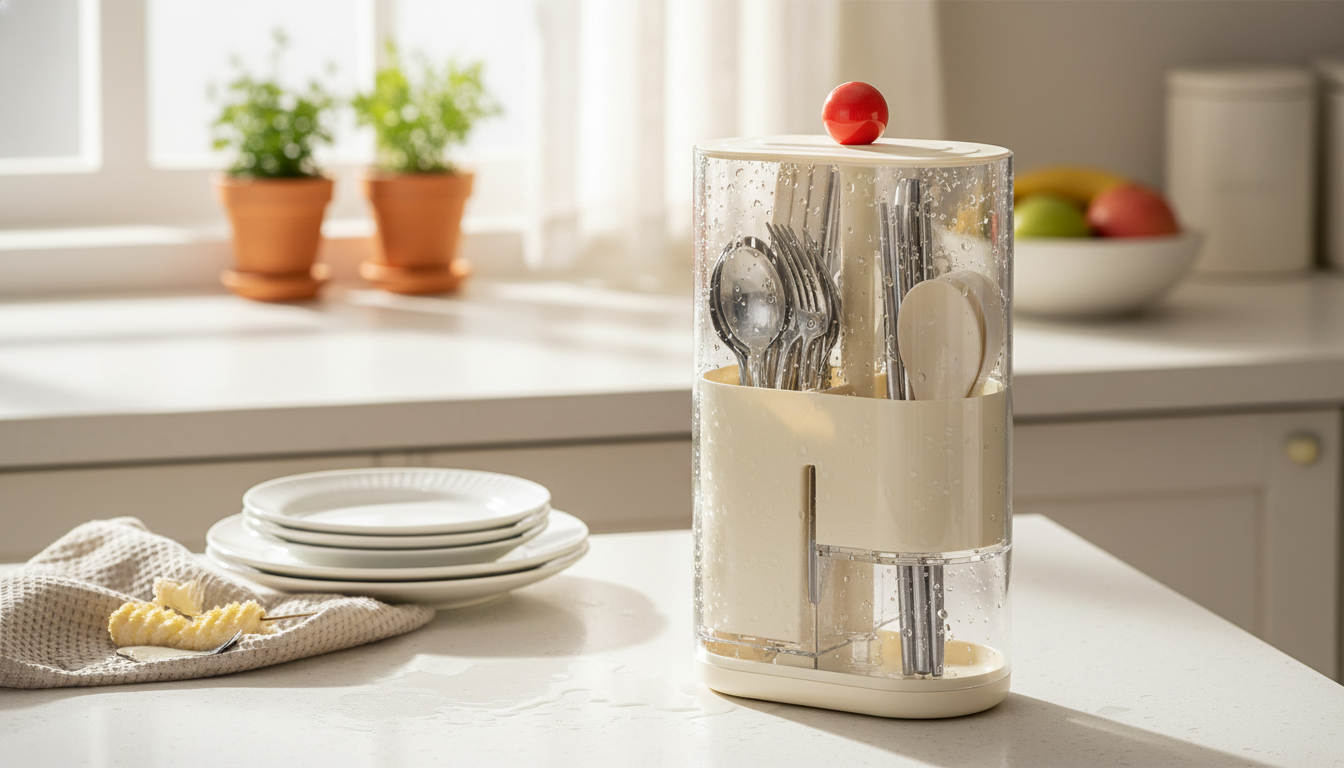
A well-run kitchen usually comes down to small systems that make everyday tasks easier. This utensil station is built to keep chopsticks, spoons, forks, and small tools organized while helping them dry faster and stay more protected from countertop splashes. With a covered design and a drainage-friendly setup, it supports cleaner storage that fits naturally into daily cooking, rinsing, and meal prep routines.
When utensils float between the sink, countertop, and stove, they tend to pile up in random cups or lay flat on towels. A dedicated holder creates one consistent “home base,” so the items used most often are easy to grab and easy to put back.
Counters near sinks and stoves are active zones: water sprays, steam rises, and tiny oil particles can travel farther than expected. Covered storage helps keep utensils cleaner between uses, while drainage helps keep the holder itself cleaner over time.
For general kitchen hygiene habits—like keeping food-contact surfaces clean and avoiding cross-contamination—authoritative guidance is available from the U.S. Food & Drug Administration (FDA) and the CDC’s food safety resources. A covered, drain-aware utensil holder can complement those habits by reducing the “wet cup” problem and limiting exposure on busy counters.
This type of organizer earns its keep when it’s used where utensils naturally change hands—right after washing, right before cooking, and right where meals are served.
If the kitchen leans toward “wash as you go,” the drainage feature is especially practical: utensils can go in after a quick rinse without leaving a wet ring on the counter or encouraging standing water at the bottom of a cup.
| Option | Protection from dust | Handles wet utensils | Countertop mess control | Best for |
|---|---|---|---|---|
| Open cup/crock | Low | Fair (water can pool) | Low | Dry utensils stored away from sink |
| Drawer organizer | High | Low (must be fully dry) | High | Minimalist counters and fully dry storage |
| Covered holder with drainage | High | High | High | Daily washing cycles and sink-side storage |
For an overview of how equipment and food-contact surfaces are commonly evaluated for safety and cleanability, see the NSF standards overview. While a utensil holder isn’t a substitute for proper washing, features that discourage trapped moisture can make everyday upkeep easier.
Where the holder sits matters almost as much as what it holds. A few small placement tweaks can reduce splashes, speed up drying, and keep the surrounding counter easier to wipe.
A dustproof cover helps, but routine cleaning keeps compartments fresh—especially in kitchens that sauté often or use strongly seasoned ingredients.
Yes, as long as the drainage area stays clear so water doesn’t pool in the base. For best results, allow airflow and empty/rinse any drip area regularly.
A quick wipe-down can be done often, especially if it sits near the sink or stove. Plan on a deeper wash on a routine schedule (such as weekly), or sooner if it’s exposed to grease or heavy cooking.
Place it near the sink for convenience, but not directly in the splash zone. A stable surface away from direct stovetop splatter helps keep the cover and compartments cleaner longer.






Leave a comment