
Flight anxiety can show up as racing thoughts, tense muscles, nausea, or the urge to avoid travel altogether. The goal isn’t to force fear away—it’s to give the nervous system clear signals of safety before, during, and after the flight. Below is a practical set of calming techniques, a simple pre-flight routine, and an optional eBook guide that organizes everything into a step-by-step plan.
Anxiety loves uncertainty, and flying is full of it: unfamiliar sounds, engine changes, seatbelt dings, and turbulence that arrives without warning. Add the feeling of not being “in control,” and the brain can interpret normal flight sensations as threats—despite modern aviation’s strong safety systems and redundancies.
Another common trap is misreading body sensations. A fast heartbeat, sweaty palms, or a fluttery stomach can feel like proof that something is wrong, which turns fear into a self-feeding loop. Anticipatory anxiety can also start days before departure, making the whole trip feel exhausting before you even reach the airport.
A helpful reframe: discomfort is information from the nervous system—not evidence that something is wrong with the plane. The body can be loud and alarmed while you’re still safe.
When anxiety spikes, aim for techniques that send a fast “downshift” signal to the body. These are designed to be subtle enough to do in your seat.
Inhale through your nose, then “top up” with a second short inhale. Exhale slowly and fully. Repeat 3–5 times. This pattern helps release trapped air and nudges the body toward a calmer rhythm.
Breathe in for 4 counts, breathe out for 6–8 counts. Keep shoulders relaxed, tongue resting, and jaw unclenched. If counting makes you more anxious, simply make the exhale longer than the inhale.
Notice feet on the floor, back against the seat, hands on the armrests. Press gently—just enough to feel solid contact and remind your brain that you’re supported.
Silently label it: “This is anxiety, not danger.” Naming the state can reduce the sense of mystery that fuels panic.
Pre-flight is where you can win a lot of calm. A small routine helps your brain stop treating the day as an unknown threat.
| Moment | What you might feel | Calming technique | Helpful self-talk |
|---|---|---|---|
| Boarding | Racing thoughts, urge to leave | Physiological sigh x 3 + feet-on-floor grounding | “I can feel anxious and still continue.” |
| Takeoff | Tight chest, dizziness | Inhale 4 / exhale 6–8 for 2 minutes | “This sensation is temporary.” |
| Turbulence | Adrenaline surge, shaking | Relax jaw/shoulders + look at a fixed point + slow exhale | “Planes are built for this.” |
| Mid-flight | Restlessness, scanning for danger | 5-4-3-2-1 sensory grounding | “I’m safe enough right now.” |
| Landing | Tension, overwhelm | Box breathing (4-4-4-4) + unclench hands | “The hardest part is passing.” |
For aviation-specific reassurance, the Federal Aviation Administration (FAA) provides safety information and education resources. For evidence-based anxiety care, see the American Psychological Association (APA).
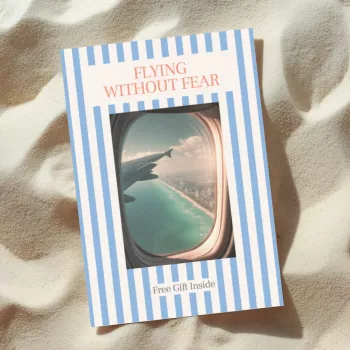
If you prefer a ready-made plan you can open on your phone while traveling, Flying Without Fear: Calming Techniques for Nervous Flyers eBook Guide organizes routines for pre-flight, takeoff, turbulence, and landing so you don’t have to remember steps under stress. It includes clear prompts for breathing, grounding, and coping statements designed for real-time use.
To reduce overall travel-day stress (and free up mental bandwidth), a simple prep system can help: Clean Faster, Stay Calm – A Stress-Free Speed Cleaning Guide for Busy Homes | Learn how to clean faster without stress. For a streamlined travel wardrobe that minimizes last-minute outfit decisions, try Modern Minimal Outfits with New Balance Guide – Effortless Style & Clean Streetwear Looks.
People use different approaches, and she has publicly discussed using therapy and support to manage anxiety. Evidence-based options that help many nervous flyers include CBT, gradual exposure, and practicing coping skills before and during flights with professional guidance when needed.
The physiological sigh (3–5 rounds) or long-exhale breathing (inhale 4, exhale 6–8) tends to work quickly, especially when paired with relaxing your jaw and shoulders and feeling your feet on the floor. Turbulence is often uncomfortable but typically not dangerous, and focusing on the exhale helps reduce adrenaline.





Leave a comment