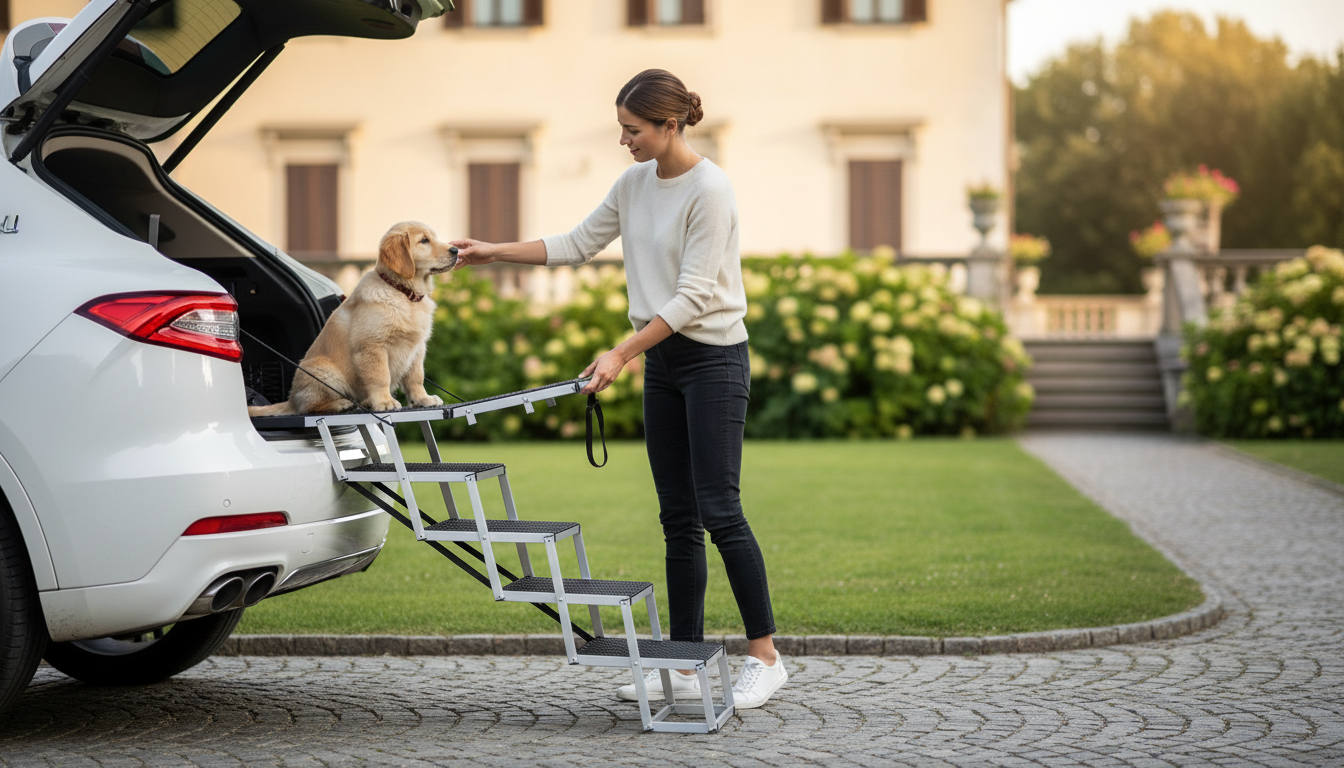
Helping a dog into a higher vehicle shouldn’t mean awkward lifting, slipping paws, or scratched door sills. Folding aluminum dog stairs offer a stable step-up option that’s easy to store, quick to deploy, and gentler on joints—especially for seniors, small breeds, and dogs recovering from injury. For premium vehicles with refined trim, low-profile doors, and plush interiors, a controlled entry path can also help reduce accidental scuffs and messy paw prints. For more guidance, see Image Tag Lookup – GDELT project.
Repeated jumping in and out of a tall SUV or stepping up into a coupe can add up over time. If a dog already shows stiffness, slow rising, or reluctance to jump, it’s worth discussing mobility support with a veterinarian and learning about joint changes common in aging dogs. Helpful overviews include the American Kennel Club (AKC) guidance on arthritis and VCA Animal Hospitals’ arthritis overview.
Luxury cars often have details that owners want to keep pristine: painted door sills, carbon fiber accents, and interior materials like leather or Alcantara. A folding stair set can be opened in seconds, placed to create a straight approach, and then folded back down without taking over the cargo space. Aluminum is also a practical fit for frequent drivers because it balances strength with portability, so it’s more likely to get used consistently (which is what helps dogs build confidence).
A small setup tweak can make a big difference: place the stairs so the top step lines up with the dog’s “landing zone” on the seat or floorboard. When the approach is straight, dogs are less likely to swing their hips into the door panel as they climb. For vehicles like Maserati, Bentley, and Alfa Romeo—where trim pieces and finishes are part of the ownership experience—this predictable path can help avoid those tiny but frustrating scuffs that happen during hurried exits.
Dogs learn “the rules” faster when the routine stays consistent. Begin with the stairs fully opened on a non-slip surface at home. Reward a single paw touch, then two paws, then a full climb—keeping sessions short and upbeat. When moving to the vehicle, resist the temptation to place the stairs too steeply just to save space. A gentle angle often prevents the pause-and-back-up behavior common in cautious dogs.
If a dog is recovering from injury or shows noticeable discomfort, pause training and check in with a professional before pushing reps. Senior mobility can change quickly, and proactive care guidance—like the AAHA senior dog care resource—can help owners spot early signs that a lower-impact approach is needed.
Both tools can work well; the better option depends on the dog’s mobility, confidence, and how much space is available around the vehicle when parked.
| Consideration | Folding Stairs | Ramp |
|---|---|---|
| Storage space | Typically compact when folded | Often longer even when folded |
| Dog joint comfort | Good for many dogs; requires stepping motion | Often best for dogs with limited flexion |
| Setup speed | Fast open/close | May require more positioning length |
| Traction needs | Non-slip steps help paw placement | Surface traction matters across entire length |
| Best for | Dogs comfortable with steps; frequent in/out trips | Seniors, rehab, long-bodied breeds, very cautious dogs |
Preference varies: confident, agile dogs often like defined steps, while seniors, long-backed breeds, or dogs with joint pain may do better with a ramp’s continuous surface. A short, treat-based trial with each option usually makes the comfort choice clear.






Leave a comment