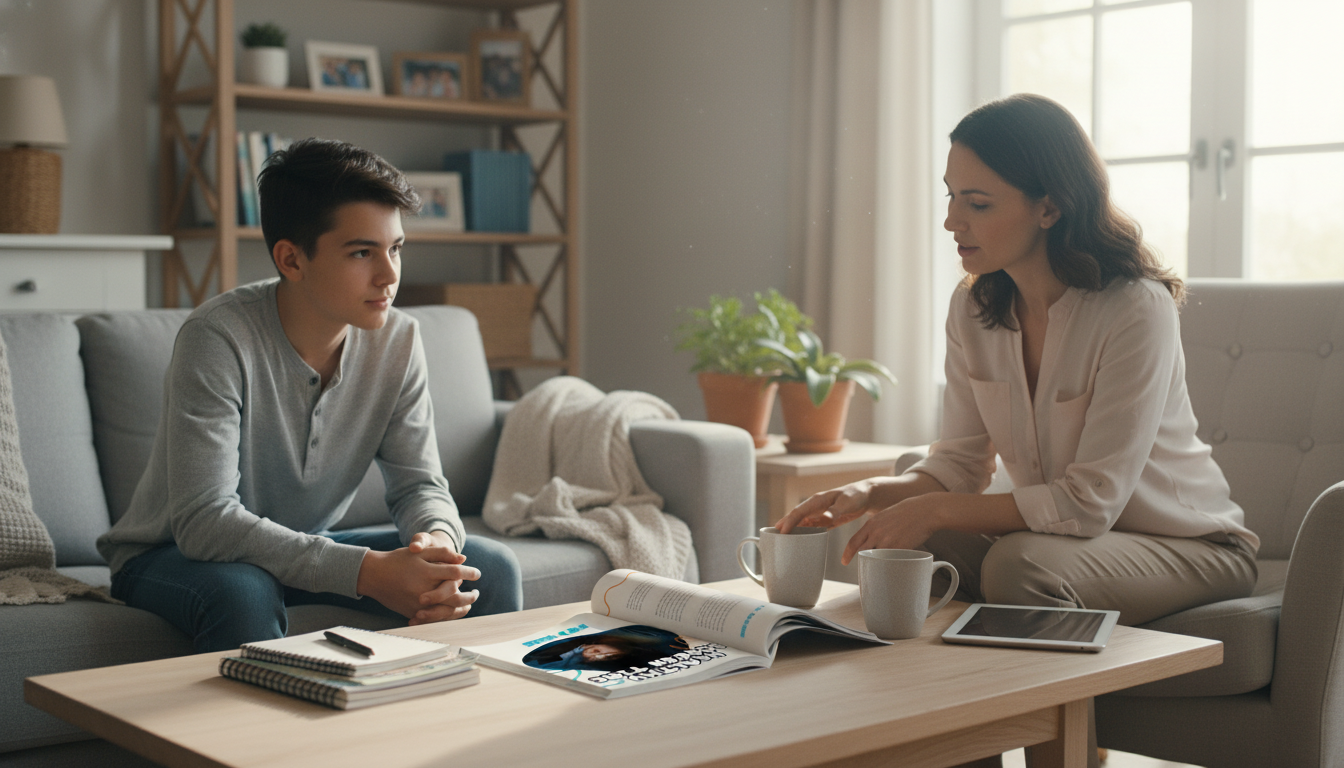
Phones, gaming, streaming, and schoolwork blur together fast for teenagers. Healthy screen time is less about strict minutes and more about protecting sleep, mental health, school responsibilities, and family relationships while still respecting a teen’s need for independence. The goal is a plan that feels fair, is easy to follow on busy days, and doesn’t turn every reminder into a fight.
Instead of chasing a perfect number of hours, focus on outcomes that matter: steady sleep, stable mood, acceptable grades, regular physical activity, and time with real people. When screens support those basics, they’re usually in a healthy place. When they crowd them out, it’s time to adjust.
It also helps to separate types of use. Homework, creative projects, music practice apps, and meaningful social connection aren’t the same as passive scrolling or late-night drama content. Look for imbalance signals like losing interest in offline hobbies, hiding use, getting unusually irritable when interrupted, or “just one more” use that routinely stretches late into the night.
Aim for a sustainable rhythm—especially during heavy school weeks—so your teen isn’t constantly in restriction mode (and constantly plotting around it).
Teens are more likely to cooperate when rules feel connected to real life. Begin by naming shared goals: protect sleep, keep grades on track, stay active, and keep communication respectful—especially during disagreements.
Then co-create a few non-negotiables. Keep them limited and clear, like no phones during homework check-ins, meals, or after lights-out. Next, define “earned flexibility”: more entertainment time once responsibilities are complete and the mood in the home is stable. Put the plan in writing and revisit monthly; teens change quickly, and a plan that fit in September may not fit in January.
If you want a ready-to-use template that turns expectations into calm, clear language, consider A Parent’s Guide to Healthy Screen Time for Teens (printable eBook).
Sleep is the anchor habit. A consistent screen curfew (often 30–60 minutes before sleep) supports an age-appropriate bedtime and reduces the “wired but tired” effect. When possible, charge devices outside the bedroom. If your teen uses their phone as an alarm, a basic alarm clock can remove the biggest excuse to keep the phone within reach.
Also address social pressure out loud. Group chats, streaks, and fear of missing out can drive nighttime checking even when a teen truly wants to sleep. The CDC’s teen sleep guidance is a helpful reference point for why protecting nighttime routines matters: CDC — Sleep and Sleep Disorders (Teen Sleep).
| Time/Context | Default Rule | Healthy Alternative |
|---|---|---|
| Before school | No social apps until ready for the day | Music/podcast while getting dressed; quick calendar check |
| After school (first hour) | Snack + decompress offline before entertainment | Short walk, shower, or check-in talk |
| Homework block | Phone out of reach; notifications off | Use laptop only for assignments; 5–10 min breaks |
| Evening entertainment | Pre-set stop time; choose content intentionally | One episode or one match, then off |
| Night routine | Screens off 30–60 minutes before sleep | Read, stretch, prep for tomorrow; charge device outside bedroom |
Keep the focus on health and safety rather than catching mistakes. Review settings together, and increase privacy as responsibility grows. The American Academy of Pediatrics has a practical planning tool families can use to align on expectations: American Academy of Pediatrics — Family Media Plan.
Teach mindful use: unfollow accounts that spike anxiety, take breaks after conflicts, and avoid comment wars late at night. The APA’s advisory offers useful context on why boundaries and guidance matter during adolescence: American Psychological Association — Health Advisory on Social Media Use in Adolescence.
When household routines are calmer overall, screen rules tend to hold better. For families working on predictable evening flow, Clean Faster, Stay Calm – A Stress-Free Speed Cleaning Guide for Busy Homes can support a less chaotic end-of-day environment, which often reduces the “escape into screens” urge.
If you’d like a done-for-you structure with space to customize, A Parent’s Guide to Healthy Screen Time for Teens (printable eBook) is designed for families to fill out together and revisit as trust and responsibility grow.
There isn’t one perfect number for every teen; quality and timing matter more than a strict total. Start by protecting anchors like sleep, homework, meals, and in-person activity, then adjust screen time up or down based on mood, school performance, and stress.
For many teens, bedroom phone access disrupts sleep and increases stress from late-night notifications and social pressure. A practical compromise is charging outside the bedroom, using an alarm clock, and setting Do Not Disturb or downtime overnight.
Use predictable, proportionate consequences tied to the behavior, such as a temporary earlier cutoff or a short-term limit on the specific app that caused the issue. Pair it with a brief reset conversation about what to do differently next time so trust can be rebuilt.







Leave a comment