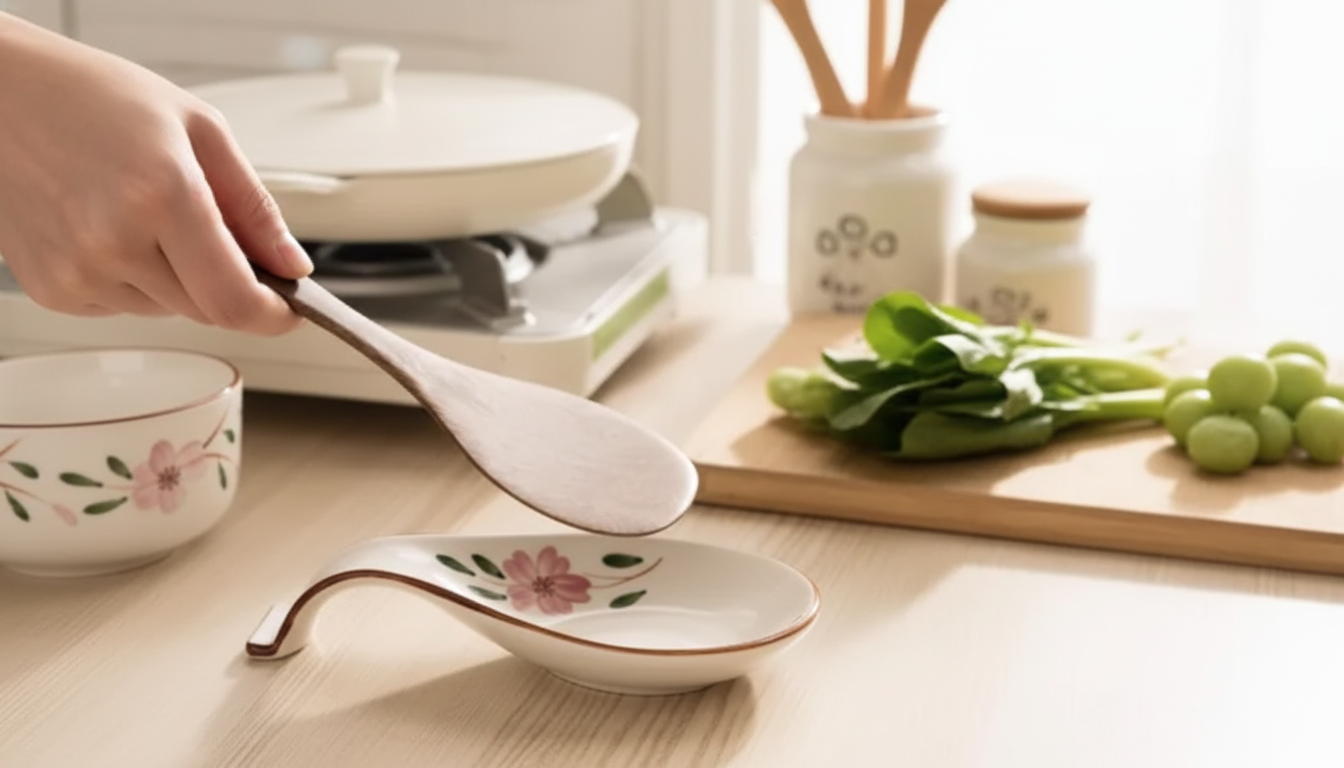
A spoon rest should do more than catch drips. This Japanese-inspired ceramic rest pairs a classic utensil cradle with a small countertop shelf so cooking tools stay elevated, contained, and easy to grab while keeping the workspace tidy. The result is a calmer cooking zone—less wandering sauce, fewer sticky handles, and one designated place that looks good enough to leave out.
Many spoon rests solve only one problem: where to set the “dirty end” of a utensil. This design adds a second level—an integrated shelf—so you can separate tools by task, cleanliness, or timing while keeping everything in one compact footprint.
| Feature | Why it matters in daily cooking |
|---|---|
| Ceramic construction | Non-porous feel, easy wipe-down, and a substantial countertop presence |
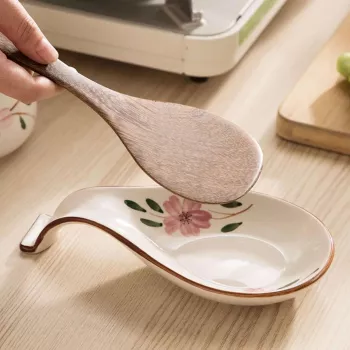
| Spoon/spatula cradle | Keeps utensil heads contained so drips don’t spread |
| Countertop shelf surface | Elevates or separates tools so handles and tips stay organized |
| Japanese-inspired look | Decor-friendly piece that can stay out on the counter |
This type of utensil rest earns its keep on busy days—when multiple tools rotate through a pan, a bowl, and a cutting board. The extra shelf is especially helpful when cooking involves frequent tasting, stirring, and swapping utensils.
Because it’s ceramic and visually simple, it works as a “leave-it-out” piece—more like a small countertop accessory than something you need to stash after every meal.
With ceramics, routine care is straightforward: quick cleaning, gentle tools, and avoiding impacts. A little attention helps keep the finish looking fresh and reduces the odds of chips along the edges.
When a ceramic accessory regularly touches utensils that go back into food, glaze quality matters. Food-safety depends on manufacturing controls and proper labeling—not just how smooth or shiny a piece appears.
For general guidance on lead in ceramics and foodware, see the U.S. Food & Drug Administration (FDA) overview. For broader lead exposure prevention information, the Centers for Disease Control and Prevention (CDC) is a helpful starting point.
If you want a functional utensil landing pad that also looks composed on the counter, the Japanese Style Ceramic Kitchen Spoon and Spatula Rest with Countertop Shelf is designed for everyday rotation—stirring, tasting, baking, and serving—without the constant counter wipe-down that comes from setting tools directly on the surface.
| Item | Details |
|---|---|
| Name | Japanese Style Ceramic Kitchen Spoon and Spatula Rest with Countertop Shelf |
| Availability | In stock |
| Price | $24.51 USD |
| Product page | See link in the product section of the page |
Kintsugi is a traditional Japanese repair method that highlights cracks with lacquer and metal powder, turning damage into a decorative feature. For kitchen items that may contact food, only use certified food-safe repair materials; otherwise, replacing chipped or cracked pieces is often the safest option for sanitation.
Well-known types include Arita/Imari, Kutani, Bizen, Shigaraki, and Mino ware, each with distinct regional techniques and finishes. This utensil rest is described as Japanese-inspired in style, rather than tied to a specific documented ceramic tradition.
Some vintage or antique ceramics can contain lead in glazes, especially if they weren’t produced under modern food-safety standards. If the history is uncertain, a lead-test kit can help screen pieces, and it’s often best to reserve questionable vintage items for display rather than food-adjacent use.





Leave a comment