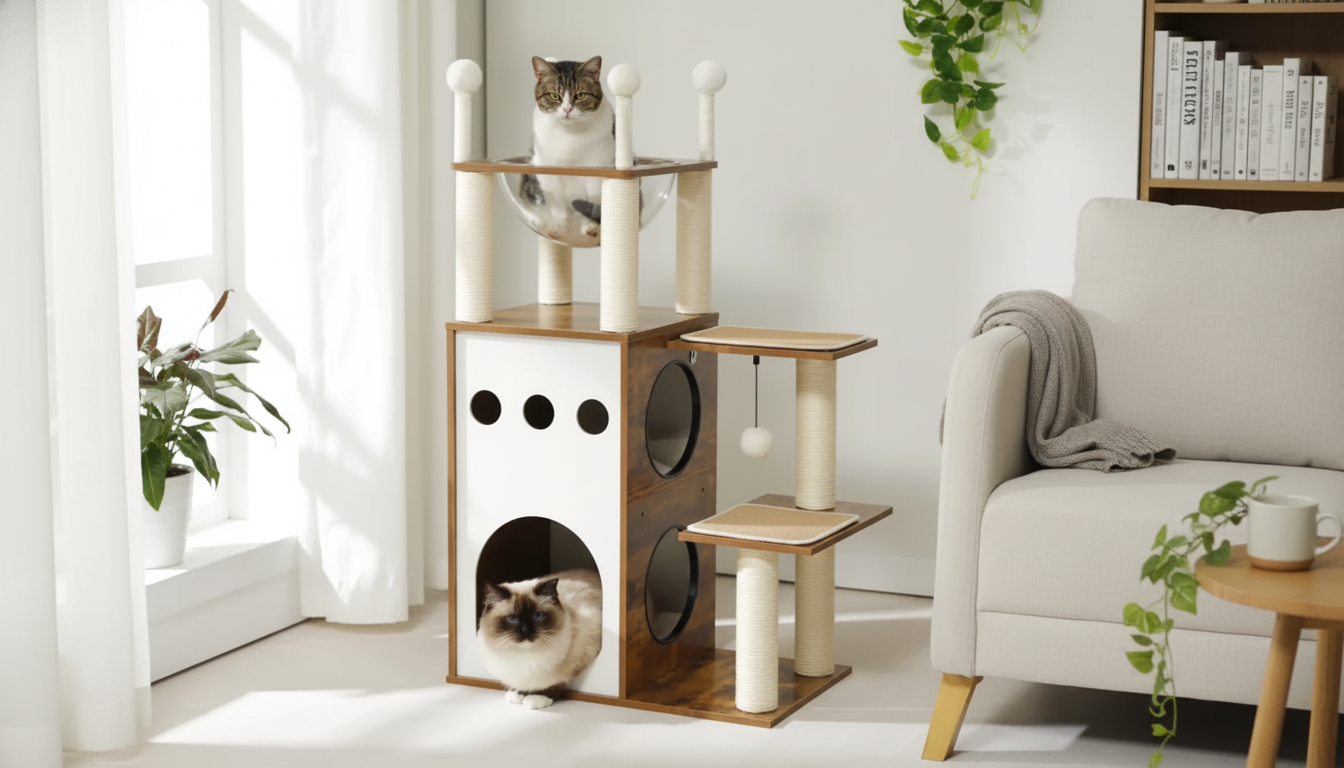
A modern cat tower can do more than save a sofa—it can add vertical territory, quiet hideouts, and a dedicated scratching routine without taking over the room. This design combines a wood-look frame with a two-level condo, a capsule-style nest, and multiple scratching posts to support climbing, resting, and daily claw care in one compact setup. For more guidance, see Solid Wood Cat Trees, Towers & Condos.
Indoor cats do best when the home supports natural behaviors: climbing, surveying, hiding, and scratching. A well-planned tower turns those needs into simple daily habits. For further reading, see Modern Cat Trees, Towers & Condos – The Refined Feline.
Feline enrichment doesn’t have to be complicated—consistent access to climbing and choice-based hiding spots can make a noticeable difference in confidence and calm. For more on environmental setup, see the American Association of Feline Practitioners (AAFP) Feline Environmental Needs Guidelines.
This style is built around “zones,” which matters because many cats rotate between social time and quiet time throughout the day. Instead of one big platform, the tower offers multiple destinations with different levels of coverage and height.
| Zone | Best for | Helpful for |
|---|---|---|
| Scratching posts | Stretch-and-scratch sessions | Directing claws away from furniture |
| Lower condo level | Quick hideaway and naps | Shy cats and decompression time |
| Upper condo level | Quiet sleep spot | Multi-cat spacing and calm |
| Capsule nest | Curled-up lounging | Cats that like semi-enclosed beds |
| Top transitions/platforms | Climbing and scanning | Confidence building and play bursts |
Scratching is especially important because it’s not “bad behavior”—it’s communication, stretching, and claw maintenance. If scratching is currently a battle in your home, the Humane Society guide to cat scratching behavior is a helpful overview of why cats scratch and how to redirect it without punishment.
Placement can make the difference between a tower that’s ignored and one that becomes a daily hangout. Cats are location-loyal: they gravitate to where the action is, and they also value predictable escape routes.
If you’re aiming for more play and less boredom, window access and a predictable daily routine can help. The ASPCA’s cat enrichment guidance offers practical ideas that pair well with a climbing-and-scratching station.
Even a beautiful cat tree won’t get used if it feels unsteady. Many cats test new furniture with cautious shifts of weight before committing to a jump or nap.
Some cats move in immediately; others need a gentle introduction. The goal is to make the tower feel like it already “belongs” in the cat’s territory.
Place the tower next to the current scratching spot, then reward any investigation with treats or play. A light sprinkle of catnip on the posts can help, but avoid placing the cat inside the condo—letting them choose builds confidence and repeat use.
Yes. Two enclosed levels can reduce competition for a single “safe” hideout and help cats spread out when they want quiet time. If one cat tends to guard resources, introduce the tower gradually and reward calm sharing around it.
Put it where your cat already spends time—near a main living area or a window—while keeping clear landing space for jumping. If your priority is stopping furniture scratching, start the tower right by the most-scratched item and adjust the location later if needed.






Leave a comment