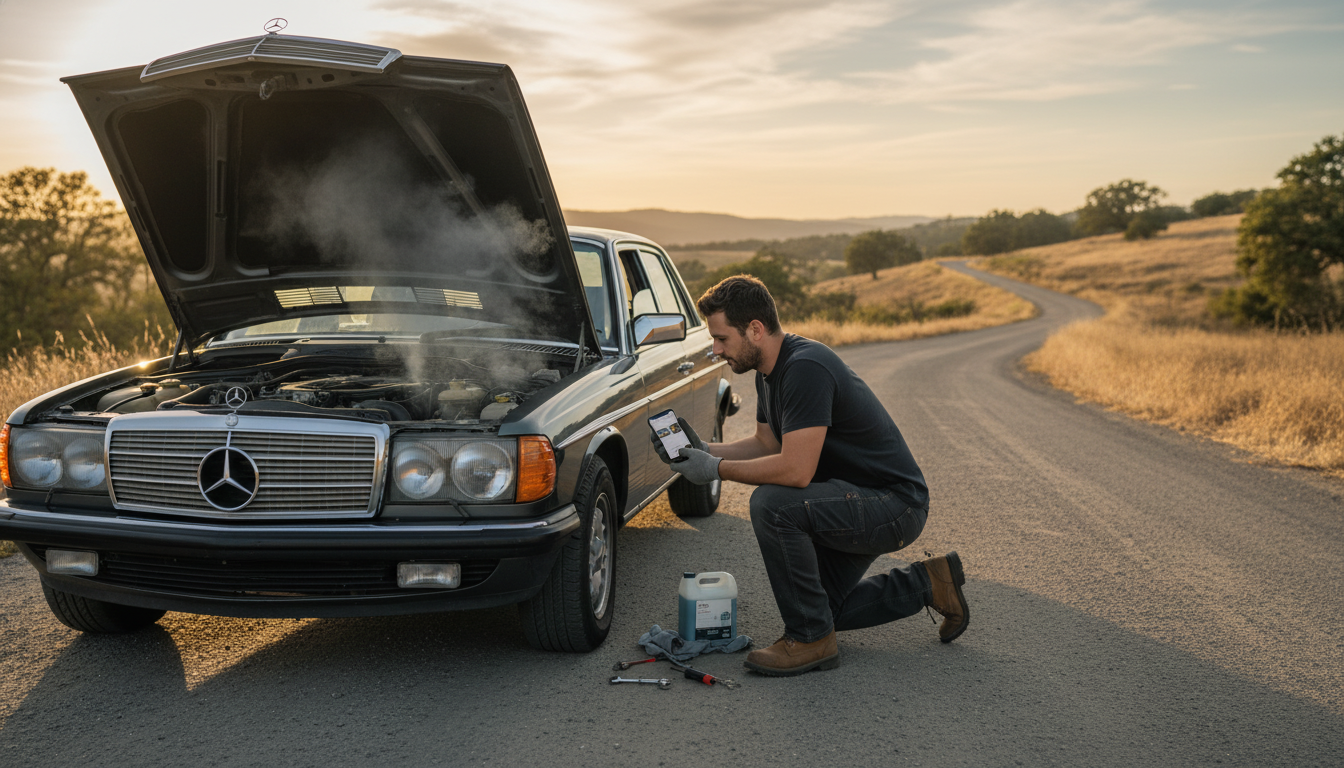
An overheating engine can escalate from a warning light to major damage in minutes. The safest approach is a calm, repeatable sequence: reduce heat load, pull over safely, let the system cool, then do only basic checks that don’t put you at risk. Below is a practical, step-by-step guide to help protect the engine and the people in the vehicle.
Overheating rarely comes out of nowhere. Catching it early can mean the difference between topping off coolant and paying for major repairs.
If the needle starts creeping up, act right away—before the gauge reaches the red zone.
Roadside safety matters as much as engine safety. If you’re on a highway, prioritize a wide shoulder or a nearby exit over “one more mile.”
For additional roadside safety guidance, review basics from NHTSA.
Once the engine has cooled down, keep checks simple. The goal is to spot obvious issues—not to perform repairs in traffic.
Overheating is usually a cooling-system issue (coolant level, airflow, pressure, circulation) rather than “the engine running hot” on its own.
| Symptom | Likely cause | Quick check |
|---|---|---|
| Overheats at idle, improves when driving | Cooling fan not running | With hood open and at a safe distance, see whether the fan cycles on as temperature rises |
| Temp spikes quickly after startup | Low coolant or thermostat stuck closed | Check reservoir level when cool; feel for hose temp change after warm-up (carefully) |
| Steam from front of car, sweet smell | Coolant leak | Look for wet hoses, dripping under radiator area, or dried crust near hose connections |
| Overheats on hills/towing | Low coolant, radiator restriction, or weak water pump | Check coolant level and visible leaks; have the system pressure-tested soon |
| Coolant keeps disappearing | External leak or internal leak | Inspect for puddles; watch for milky oil or white exhaust smoke (seek professional diagnosis) |
For general maintenance guidance and service intervals, see resources from AAA Auto Repair and the Car Care Council.
If the gauge is in the red, a temperature warning light stays on, or power drops noticeably, shut the engine off as soon as you can pull over safely. If you’re still below the red zone, turning the heater on high while you move to a safe pull-off can help reduce heat load for a short time.
No—opening a hot, pressurized cooling system can release boiling coolant and cause severe burns. Wait until the engine cools, then add coolant to the reservoir if appropriate and follow the owner’s manual for any vehicle-specific steps.
Yes, even a short drive with the gauge in the red can warp cylinder heads or damage the head gasket. If the temperature rises again after cooling or topping off, stop and arrange a tow rather than trying to “make it there.”





Leave a comment