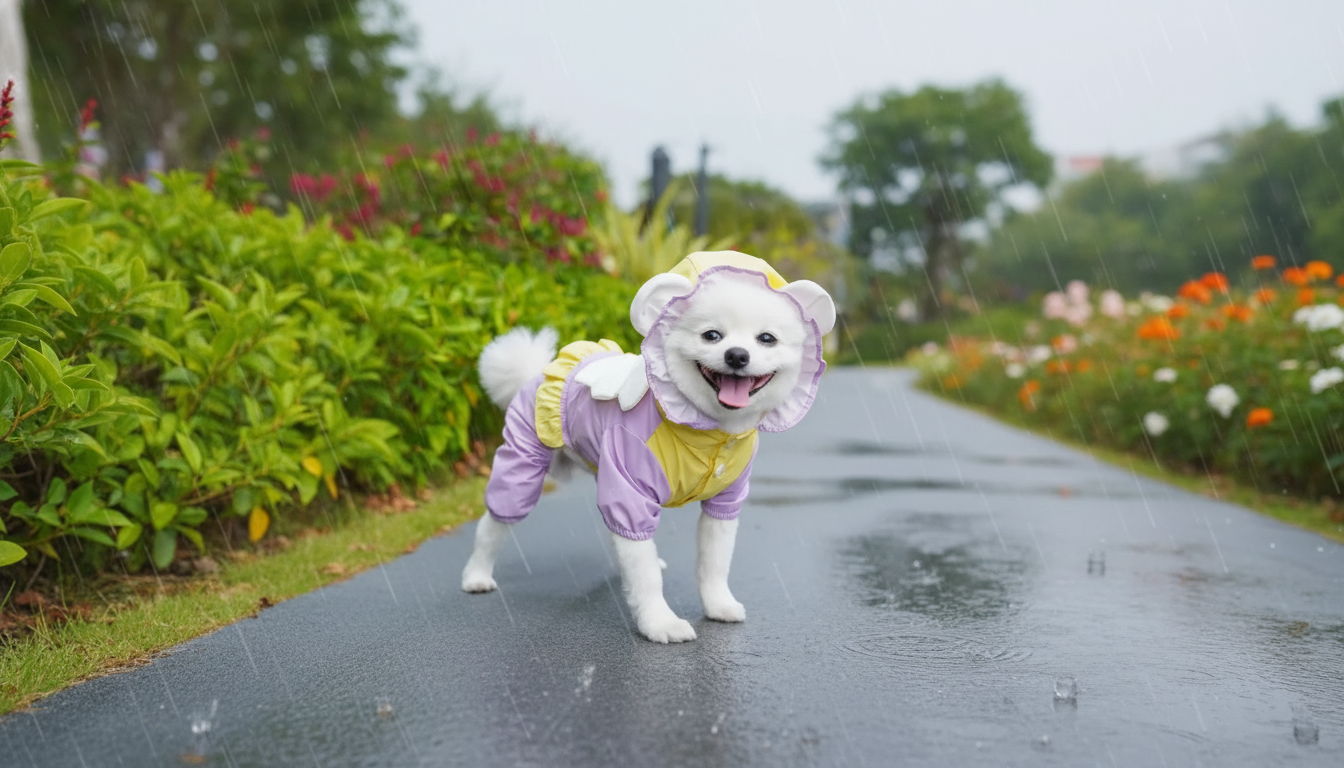
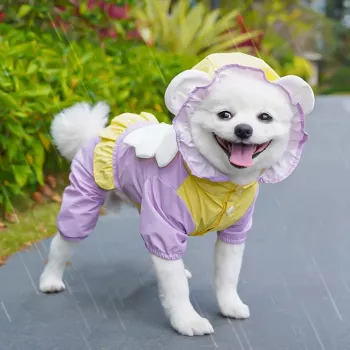
Rainy-day walks stay comfortable when a coat keeps water out, covers the legs, and fits securely without slipping. This purple four-leg raincoat uses a button closure and full-body coverage to help reduce soggy fur, muddy splashes, and post-walk cleanup—while keeping movement easy for everyday outings.
Standard rain ponchos can help with light drizzle, but they often leave the underside and legs exposed—exactly where puddle splash and sidewalk spray hit hardest. A four-leg design is built to cover more of the body so your dog comes home cleaner and more comfortable.
For cold, wet days, general pet weather safety still matters—keep walks reasonable, watch for shivering, and dry paws after exposure. The ASPCA’s seasonal guidance is a helpful reference for practical precautions: ASPCA — Cold Weather Safety Tips.
This raincoat is designed for everyday wet-weather routines: quick potty breaks, neighborhood walks, and rainy errands where staying dry makes the whole day easier.
| Feature | What it means for daily use |
|---|---|
| Waterproof material | Helps block rain and keep the coat from soaking through quickly |
| Four-leg coverage | Adds protection for legs and underside where splashes collect |
| Button closure | Helps prevent shifting; convenient for dogs that dislike over-the-head gear |
| Color: Purple | High-visibility look that stands out in overcast conditions |
The best raincoat is the one your dog will actually wear without fuss. Fit is especially important in a four-leg style because the leg openings and shoulder area do more work during movement.
If you want a quick refresher on getting accurate measurements, the AKC’s walkthrough is a reliable step-by-step guide: American Kennel Club — How to Measure Your Dog for Clothes.
Even dogs that usually tolerate harnesses can be suspicious of legwear at first. A calm routine (and a predictable reward) makes a big difference.
A simple comfort check: watch for normal stride length and an easy sit. If the coat pulls across the shoulders, rides up the belly, or causes short steps, it’s usually a sizing or alignment issue—unbutton, straighten, and try again.
Waterproof materials last longer when grit and mud are removed promptly. Road salt, sand, and fine debris can slowly wear down protective coatings if they’re left to grind in during repeated use.
For multi-dog households or frequent rainy seasons, keeping a small “door kit” nearby (towel, paw wipes, and a place to hang the coat) can reduce tracking and speed up cleanups.
Full-coverage rain gear shines when the weather is messy rather than simply wet. If your dog tends to get soaked low to the ground, the added leg and underside coverage is noticeable.
Use a soft tape to measure chest girth (widest part behind the front legs) and back length (base of neck to base of tail). Compare with the size guide and make sure the chest fit allows the buttons to close comfortably without pulling, while leg openings don’t restrict stride.
A correctly sized coat should allow a full stride and comfortable sitting. If your dog starts taking shorter steps or the fabric pulls at the shoulders, the fit is likely too tight or twisted and should be adjusted.
Rinse off mud, wipe the surface clean, and air-dry fully before storing. Avoid high heat and harsh detergents unless the care instructions specifically allow them, since they can reduce water resistance over time.




Leave a comment