HomeBlogBlogTesla 260ml Car Humidifier Diffuser: Clean Cabin Mist

Tesla 260ml Car Humidifier Diffuser: Clean Cabin Mist

Tesla 260ml Car Humidifier Diffuser: Clean Cabin Mist

260ml Car Humidifier & Aromatherapy Diffuser for Tesla: Cabin Comfort Without the Clutter

A Tesla’s clean interior design and efficient climate control can still feel dry during long drives, winter months, or heavy A/C use. A compact humidifier-diffuser can add a light mist for comfort while letting preferred scents stay subtle rather than overpowering. Below is a practical, Tesla-friendly guide to what to expect, how to use a 260ml unit safely, and how to keep it running smoothly in a daily-driven cabin.

What It Does in a Tesla Cabin

A small in-car humidifier is designed to improve “feel,” not to transform the entire cabin into a spa-like humidity zone. In a Tesla, it can be a nice add-on for comfort without adding visual clutter.

  • Adds gentle moisture to help reduce that “dry air” feeling from continuous HVAC use.
  • Diffuses water-soluble fragrance or essential oils (when used sparingly) to keep the cabin smelling fresh.
  • Creates a more pleasant environment for commutes, rideshare shifts, and road trips—especially in dry climates.
  • Works best as a comfort accessory rather than a replacement for proper HVAC maintenance (filters, cabin cleaning).

If you’re trying to maintain a comfortable humidity range, the EPA’s indoor air resources are a helpful reference point for understanding why overly dry air can feel irritating and why too much moisture can create its own issues: U.S. Environmental Protection Agency (EPA) — Indoor Humidity.

At-a-Glance Specs and Fit

A 260ml tank size is intentionally compact—easy to store, quick to fill, and practical for short refresh cycles rather than all-day room humidification.

Quick Reference

Detail What to Know
Capacity 260ml water tank for compact in-car misting
Primary benefits Light humidification + optional aromatherapy
Where it fits best Cup holder or stable flat surface (upright)
Best for Dry air comfort, subtle cabin freshness
  • Reservoir capacity: 260ml (designed for compact, in-car use rather than whole-room humidifying).
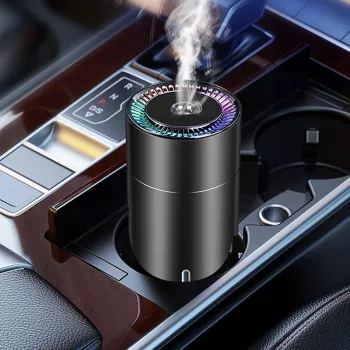
  • Best placement: stable, upright spot that won’t interfere with driving—commonly a cup holder or a secure flat area.
  • Use case sweet spot: short-to-medium drives, office parking breaks, and quick refresh cycles between errands.
  • Power considerations: pair with a suitable USB/vehicle power solution and keep cables routed away from controls.

Choosing Water and Scents (So the Cabin Stays Clean)

The biggest difference between a pleasant, low-maintenance setup and a gunky, inconsistent mister usually comes down to water choice and how aggressively oils are used.

  • Use clean water to reduce mineral buildup; if local tap water is hard, consider distilled to help keep the unit cleaner longer.
  • Keep scent levels low: start with fewer drops than expected and increase only if needed.
  • Avoid heavy, resinous, or thick oils that can leave residue over time; the goal is a light, clean fragrance.
  • If anyone in the car is sensitive to fragrance, run it with water only or choose a very mild scent.

For passengers with sensitivities—or if you’re simply cautious—review basic essential oil safety guidance from a medical authority before regular use: National Institutes of Health (NCCIH) — Essential Oils: What You Need To Know.

Daily Setup: Placement, Stability, and Safe Operation

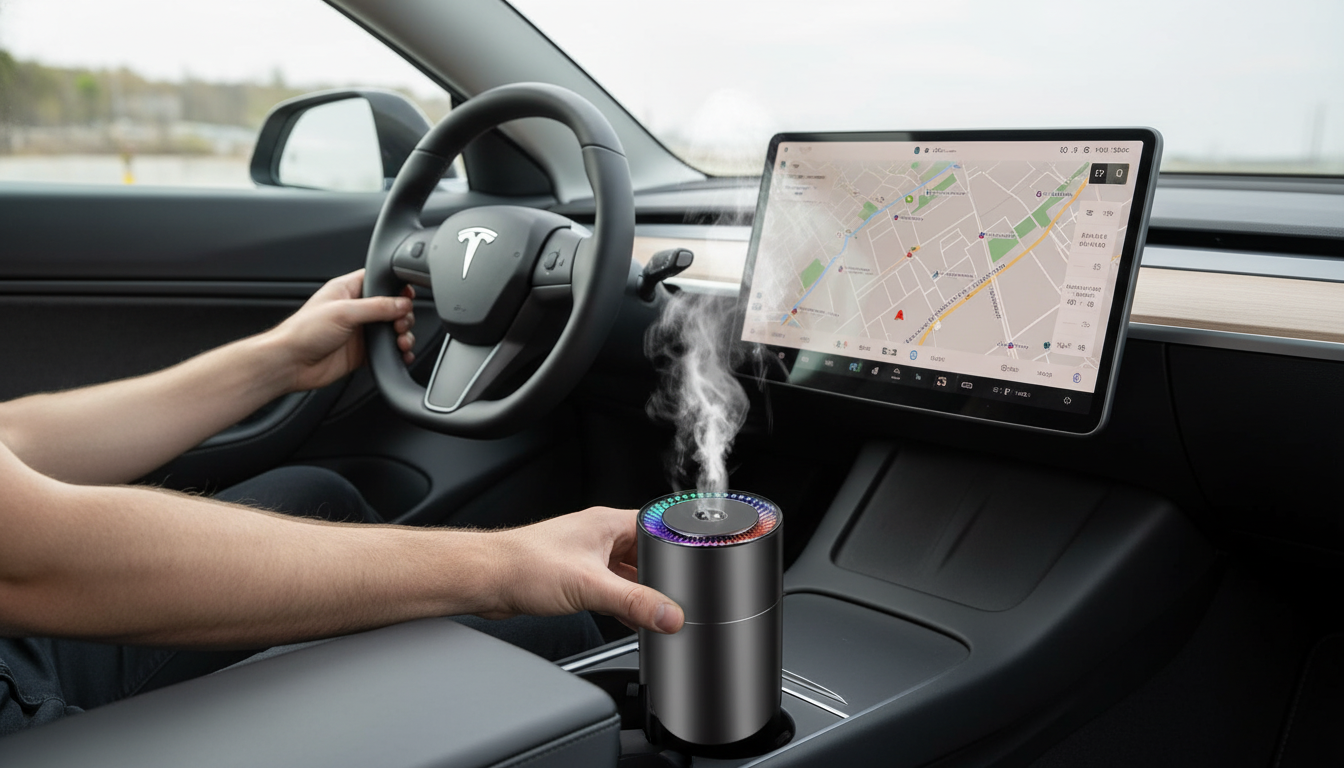
Tesla cabins tend to have prominent screens, clean trim seams, and charging areas that you’ll want to keep dry. The goal is to let mist disperse into open air—not settle on surfaces.

  • Place the unit upright on a stable surface; avoid sloped areas and keep it away from airbags and driver controls.
  • Keep mist output directed away from screens, trim seams, and charging areas; moisture should disperse into open cabin air.
  • Use only while attentive to conditions—avoid operating if it risks condensation on glass during cold weather.
  • Prevent spills: fill on a steady surface before driving, and close caps firmly to avoid leaks over bumps.

A helpful habit for daily drivers: treat it like a travel mug. If you wouldn’t set an open cup of water there for the next 30 minutes of turns, braking, and speed bumps, don’t set a humidifier there either.

When It Helps Most (And When to Skip It)

A car humidifier is best as an “as needed” accessory—especially in a vehicle that already manages temperature efficiently.

  • Helpful: winter heating that feels drying, long highway stretches, or extended A/C use in arid regions.
  • Helpful: quick “reset” after carrying food odors, gym bags, or pets—aim for a subtle scent rather than masking with strong fragrance.
  • Skip or reduce: very humid days, fog-prone conditions, or if windows begin to haze—comfort should never reduce visibility.
  • If odors persist, address the source: cabin air filter condition, interior fabric cleaning, and proper ventilation.

If you notice recurring musty smells, don’t try to “diffuse over” the issue. A quick filter check and a basic interior wipe-down usually pays off more than stronger fragrance.

Cleaning and Maintenance for Consistent Mist

Product Options In Stock

FAQ

Can a car humidifier cause condensation on windows?

Yes—especially in cold weather or when humidity is already high. Use a low mist setting, aim the mist away from glass, and stop using it immediately if fogging begins.

Is it safe to use essential oils in a car diffuser?

It can be, but use very small amounts and avoid heavy oils that can leave residue. If any passenger is fragrance-sensitive, run water only or choose a very mild scent.

How often should a 260ml car humidifier be cleaned?

Rinse it frequently if you use it often, and do a deeper clean when mist output drops or you see residue. Emptying leftover water after use also helps prevent odors.

Was this article helpful?

Yes No
Leave a comment
Top

Shopping cart

×