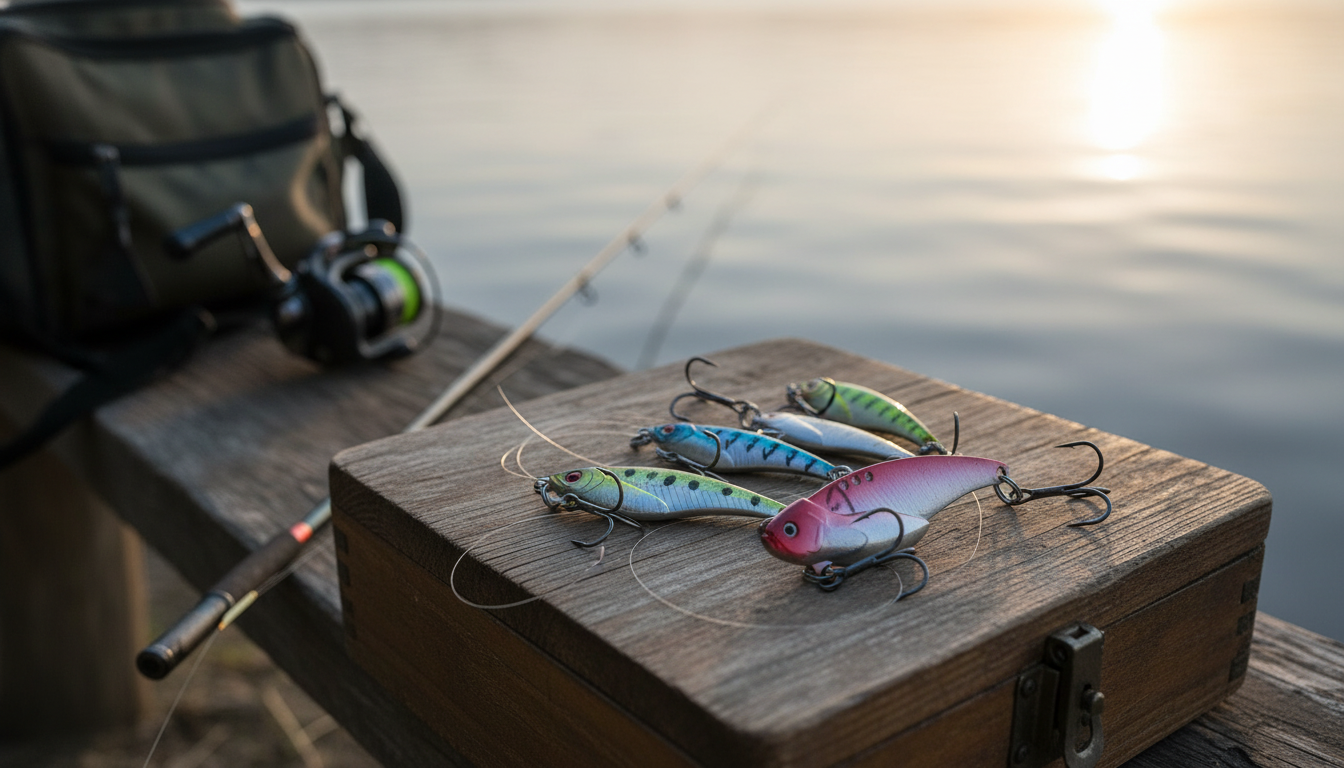
A blade spoon is built for covering water quickly, reaching depth without fuss, and calling fish in with tight vibration and flash. This VIB sinking blade spoon in 0.42oz and 0.92oz is designed for anglers targeting aggressive predators in lakes, rivers, and reservoirs—especially when fish are holding deeper or reacting to a fast, noisy presentation.
Compared to wider-wobbling hard baits, a VIB (vibration) blade spoon is a compact, metal profile that trades bulk for speed and signal. It gets down fast, stays connected to your line, and communicates through the rod tip.
Blade spoons are at their best when you need a lure that (1) reaches depth fast and (2) still “talks” clearly through wind, current, and long line. They also excel when predators want a tighter vibration rather than a wide rolling action.
The biggest performance difference between these two options is how quickly you can get the lure to the level fish are holding—and how well it stays there once you start moving it. The heavier 0.92oz also helps keep your line tighter in wind or current, which improves bite detection on the drop.
| Situation | 0.42oz | 0.92oz |
|---|---|---|
| Shallow-to-mid depths with a controlled fall | Best | Good if kept moving |
| Deep structure and quick bottom contact | Good | Best |
| Windy banks / long casts needed | Good | Best |
| Strong current or fast drift | Fair | Best |
| Slow lift-drop cadence | Best | Good (use shorter lifts) |
The “right” retrieve depends on whether fish are chasing or just reacting. A blade spoon gives you a handful of high-percentage presentations without changing lures—useful when you’re trying to dial in depth and mood quickly.
When strikes feel like “nothing,” assume the bite is happening on the fall. Watch for line ticks, sudden slack, or the lure stopping early—then respond with a firm sweep to load the rod and pin the hook.
Because blade spoons transmit so much vibration, the goal is a setup that keeps you connected without ripping hooks free during sudden surges near the boat or bank.
If you fish rivers or tidal systems, current speed changes lure angle and sink rate. Checking local flow and tide timing can help plan when to probe deeper seams versus when to work slack edges (see NOAA Tides & Currents).
Always confirm seasons, limits, and local regulations before heading out. A quick reference for freshwater rules and licensing is available through the Florida Fish and Wildlife Conservation Commission (FWC) (your state agency may differ).
It can be fished from shallow water down to deep structure as long as you control sink time and keep contact. Use a count-down to reach suspended fish, or let it hit bottom and work it back with lifts and drops; the 0.92oz reaches depth faster and holds better in wind or current.
Slow the cadence with shorter yo-yo lifts, longer pauses, and controlled slack so it flutters naturally. Many bites happen on the fall, so watch for line ticks or the lure stopping early and sweep-set to connect.
Braid gives the best feel and depth control, especially for detecting bites on the drop, while mono/fluoro adds stretch and can be better for visibility and abrasion resistance. A versatile setup is braid main line with a fluorocarbon leader when conditions call for it.






Leave a comment