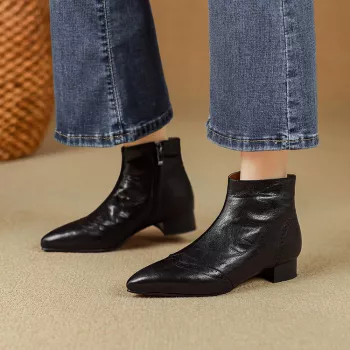
Cold-weather footwear works best when warmth, traction, and stability come together without sacrificing everyday style. These genuine leather ankle boots pair a cozy wool lining with a chunky heel for secure footing and easy wear from commute days to weekend plans. For anyone building a winter capsule around versatile layers, they’re the kind of boot that looks polished with denim yet still feels practical when sidewalks turn cold and slick. For more guidance, see Fashion boot – Wikipedia.
Shop Winter Women’s Genuine Leather Ankle Boots with Wool Lining & Chunky Heel For further reading, see [PDF] Well Heeled Lifestyles: The Shoes of David Evins and the Women ….
Wool has a reputation for warmth for good reason: its fibers naturally trap tiny air pockets that help retain heat while still staying breathable. That balance matters in winter, when feet often move between freezing outdoor temps and overheated indoor spaces. For a deeper explanation of wool’s natural performance properties, see The Woolmark Company’s overview of why wool performs so well.
Thin-to-midweight wool socks usually work best with lined boots: they reduce friction, help manage temperature swings, and keep the fit from feeling overly tight. If the boot feels snug at first, try a thinner sock for the first few wears, then step up to a warmer weight once the leather relaxes slightly.
For the most comfortable fit, wear the boots at home in short intervals and focus on natural flex points—across the forefoot and at the ankle bend. Leather typically softens with gentle use, and gradual break-in helps prevent hot spots on the first long day out.
Before committing to a full-day wear, check three things: the heel feels stable, the insole feels supportive under the arch and ball of foot, and there’s enough toe room to wiggle even with winter socks. A little extra space is helpful in cold weather because tight shoes can reduce circulation and make feet feel colder.
| Feature | Why it matters in winter | Quick check before heading out |
|---|---|---|
| Wool lining | Adds insulation and helps manage moisture | Feet feel warm without overheating indoors |
| Genuine leather upper | Blocks wind and adapts to foot shape over time | No stiff pressure points at the ankle bend |
| Chunky heel | Improves stability versus a narrow heel | Heel feels planted on tile and pavement |
| Ankle height | Adds coverage and helps keep heat in | No rubbing at collar; socks stay in place |
A chunky heel is a winter-friendly detail because it widens the contact area with the ground. That can translate to better balance on uneven sidewalks, slushy parking lots, and those awkward curb transitions where footing can feel uncertain.
Winter traction depends heavily on outsole design and the rubber compound. If conditions turn icy, consider adding stick-on traction aids or temporary grips for extra confidence—especially when walking to and from public transit or across untreated walkways. For a practical look at how winter footwear features affect performance, REI’s winter boot basics is a helpful reference point.
For deep snow, freezing rain, or glare ice, purpose-built snow boots may be the safer choice. Ankle boots shine for cold, dry days and typical city winter conditions, but extreme weather often calls for taller shafts, aggressive tread, and additional water protection.
If you like minimalist outfit planning, pair these boots with a simplified wardrobe approach from Modern Minimal Outfits with New Balance Guide – Effortless Style & Clean Streetwear Looks.
Cold weather can also be hard on skin, especially around heels and toes when indoor air gets dry. The American Academy of Dermatology’s cold-weather dry skin tips can be useful if you’re dealing with seasonal dryness while wearing boots more often.
Shop Winter Women’s Genuine Leather Ankle Boots with Wool Lining & Chunky Heel
Yes—wool is naturally insulating and breathable, which helps it stay comfortable across temperature changes. Warmth depends on the coat’s weight and weave, and pairing it with a scarf, hat, and warm boots makes the biggest difference on windy days.
The best winter boots combine warmth (like a lining), weather resistance, a traction-focused outsole, and a stable shape/heel with enough room for winter socks. In deep snow or icy conditions, dedicated snow boots are often safer than everyday ankle boots.





Leave a comment