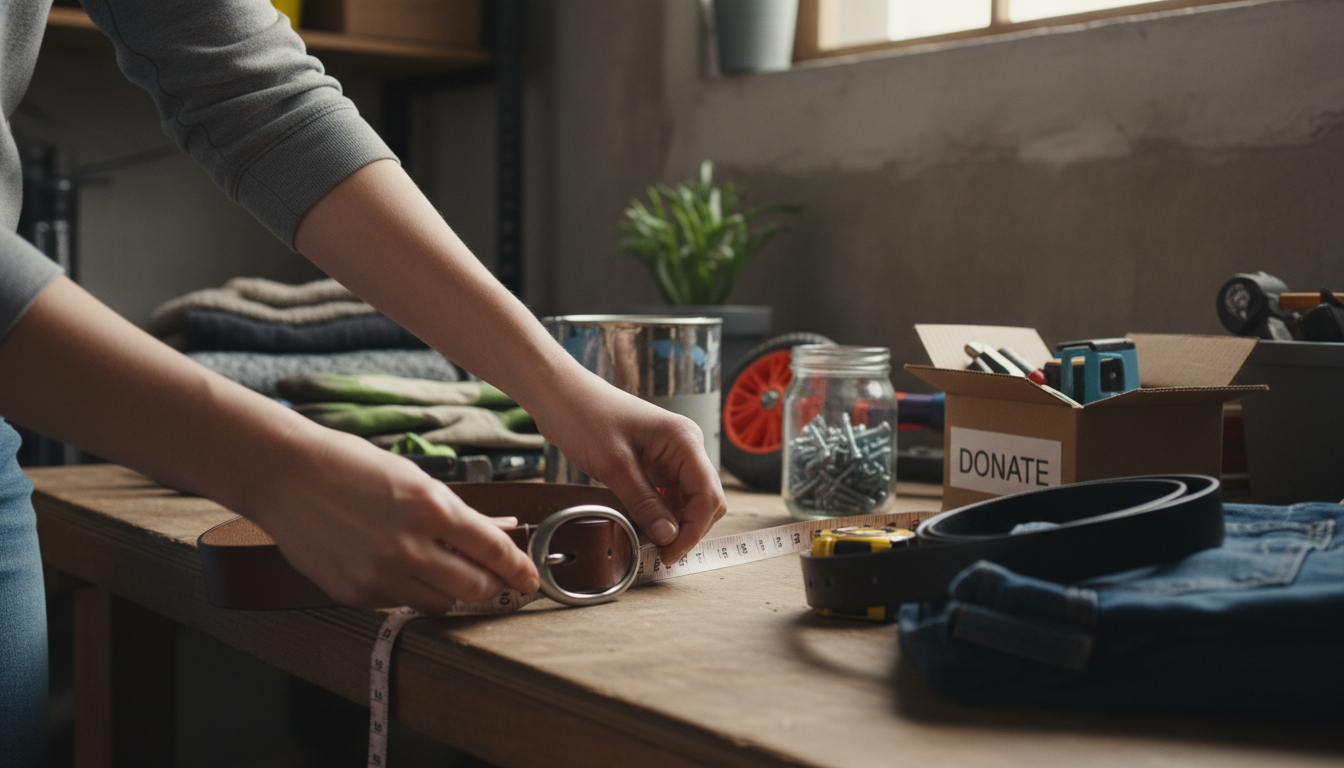
Choosing the right women’s belt size comes down to one thing: matching the belt to where you’ll wear it. A belt that fits your jeans loops may not fit the same way at your natural waist over a dress, so start by deciding on the outfit and belt position first.
Use a soft measuring tape and wrap it around the spot you plan to wear the belt (hip/low-rise, mid-rise, or natural waist). Keep the tape snug but not tight. That measurement is the most reliable starting point, especially for belts worn over dresses, blazers, or knitwear where pant sizing doesn’t apply.
Belts are commonly sized in inches (like 28, 30, 32) or by S/M/L. If the belt is sized in inches, choose a size that’s closest to your measurement and intended to be worn on the middle hole. That gives room to tighten or loosen as needed. If it’s S/M/L, check the brand’s size chart and pick the range that includes your measurement—don’t guess based on your usual clothing size.
A well-fitting belt typically fastens on the center hole, leaving a few holes on either side for comfort and layering changes. If you’re consistently on the last hole, size down; if you’re on the first hole, size up.
Width affects fit and function: a slim belt is easier to wear at the waist or with dresses, while a wider belt needs sturdier belt loops and can feel tighter. Also consider buckle size—statement buckles can take up extra space and may feel different when seated.
If you’ll wear the belt over thicker layers (sweaters, blazers), size up. If it’s primarily for jeans or trousers with belt loops, your measured hip/waist point usually lands you in the correct size.
For more fit tips and styling guidance, see the full guide here: women’s belt styling & fit guide.
Measure around where you’ll wear it, then choose a belt size that lets you buckle at the middle hole—typically your measurement plus about 1–2 inches depending on the brand’s sizing. Always confirm with the product’s size chart when available.




Leave a comment