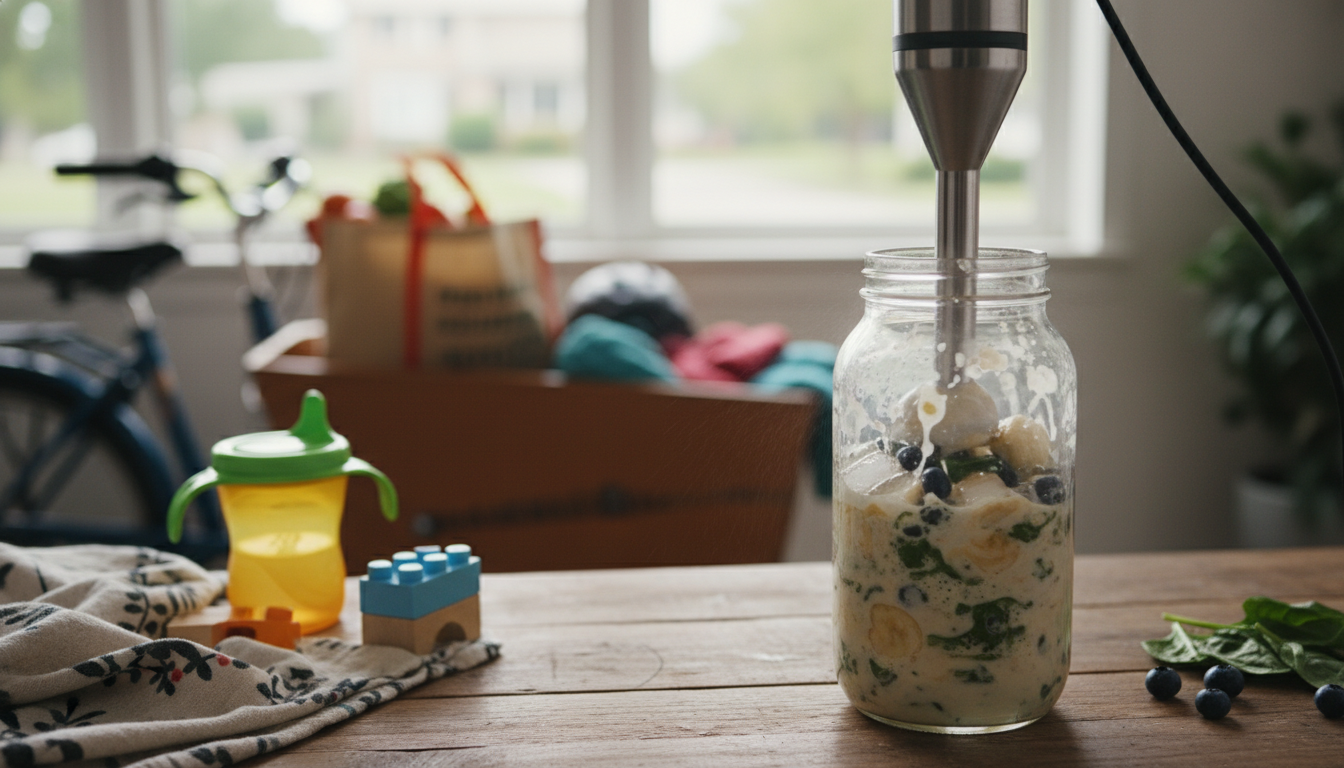
A hand blender (immersion blender) can make a smooth, drinkable smoothie quickly—without hauling out a full-size blender. The key is using the right cup, adding ingredients in the right order, and blending in short bursts so everything breaks down evenly.
Use a tall, narrow blending cup or smoothie cup (often included with multi-function hand blenders). A narrow container helps the blade create a strong vortex that pulls ingredients down for a smoother result. Avoid shallow bowls that encourage splashing and uneven blending.
Start with liquid first (milk, water, juice, or yogurt). Then add soft items (banana, berries, nut butter), followed by leafy greens. Add frozen fruit or ice last. This order keeps the blades moving freely and reduces air pockets that can leave chunks behind.
Insert the blender head fully into the cup before turning it on. Begin on low speed, then increase as the mixture loosens. Keep the blade slightly tilted and move it slowly up and down in small ranges to circulate ingredients. Blend in pulses if the mixture is thick—continuous high speed can overheat the motor and fling liquid upward.
If it’s too thick to circulate, add 1–2 tablespoons of liquid and pulse again. If leafy greens are stringy, blend a few extra seconds while gently moving the blender head around the cup’s edges. If frozen chunks remain, let them sit for 1–2 minutes to soften, then blend again.
Once smooth, stir in chia seeds, oats, or protein powder and do a brief final blend (5–10 seconds). Taste, adjust sweetness, and serve immediately for the best texture.
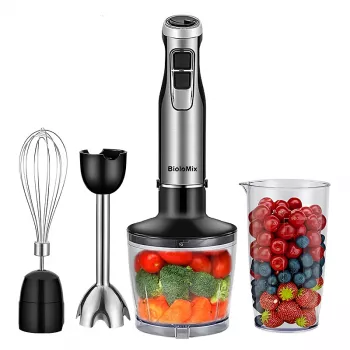
For a deeper look at choosing attachments (like a smoothie cup or chopper) and getting the most from a multi-function unit, visit this hand blender guide.
Many hand blenders can handle small amounts of ice if the motor is strong and there’s enough liquid to help the blades move. Use short pulses and add ice last; if the blender struggles, switch to frozen fruit or partially melted ice.





Leave a comment