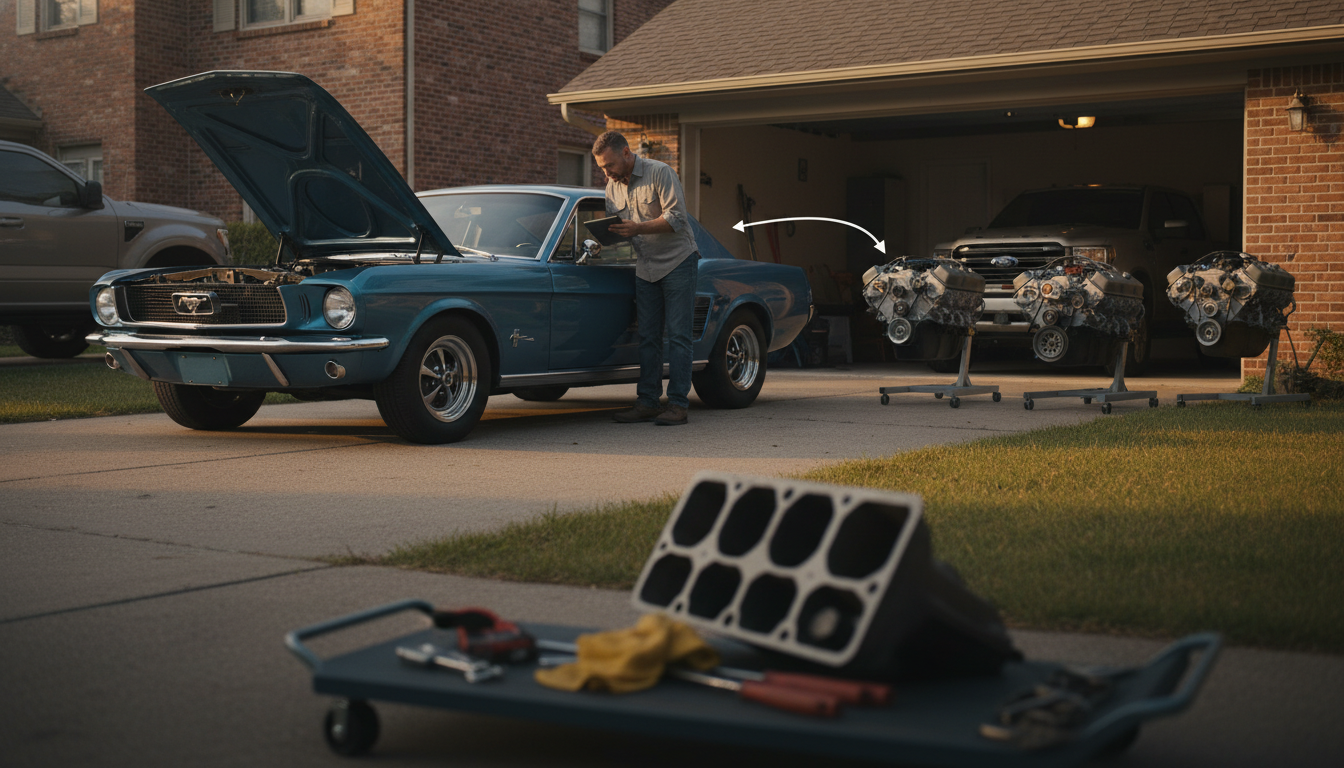
Ford has built many V8 families over the decades, so the fastest way to identify one is to combine visual clues with the engine’s ID numbers. Start simple: note the vehicle year, truck vs. car, and whether it’s fuel-injected or carbureted. Then confirm with casting numbers, the VIN, and the emissions label under the hood.
On most Ford vehicles, the VIN can point to the original engine (often via an engine code character). The under-hood emissions sticker is even more helpful: it typically lists engine displacement (like 5.0L, 5.4L, 6.2L), fuel system type, and calibration info. If the engine has been swapped, the sticker may not match—so use it as a starting point, not the final word.
Quick visual tells can narrow the field:
Modular V8s (4.6L/5.4L/6.8L): overhead cam layouts, wide cylinder heads, and coil-on-plug ignition are common. Many have a large plastic intake and front cover that visually dominates the engine bay.
Small-block “Windsor” (221/260/289/302/351W): classic distributor-at-the-front look on older setups, compact block, and familiar small-block proportions.
FE series (352/390/427/428): older big-block styling; often identified by casting marks and a heavier, taller appearance compared with small-blocks.
385-series big-block (429/460): large intake valley and big external dimensions; commonly found in trucks and older performance applications.
Ford casting numbers are usually on the block (often near the starter or along the side), and on heads and intake manifolds. Clean the area, copy the full alphanumeric code, and cross-reference it to confirm the engine family and approximate date range. Some engines also have an assembly tag or sticker that helps identify the exact build.
Badges and trim can hint at what Ford intended the vehicle to have (even if it’s been modified). For ideas on V8-themed exterior identification and styling cues, see the main guide here: https://mrsmattie.com/blog/guide-v8-flag-emblem-badge-3d-metal-car-sticker-upgrade/.
Common locations include the side of the engine block, near the starter mounting area, and on the cylinder heads or intake manifold. They’re often dirty or painted over, so light scraping and degreasing can make them readable.







Leave a comment