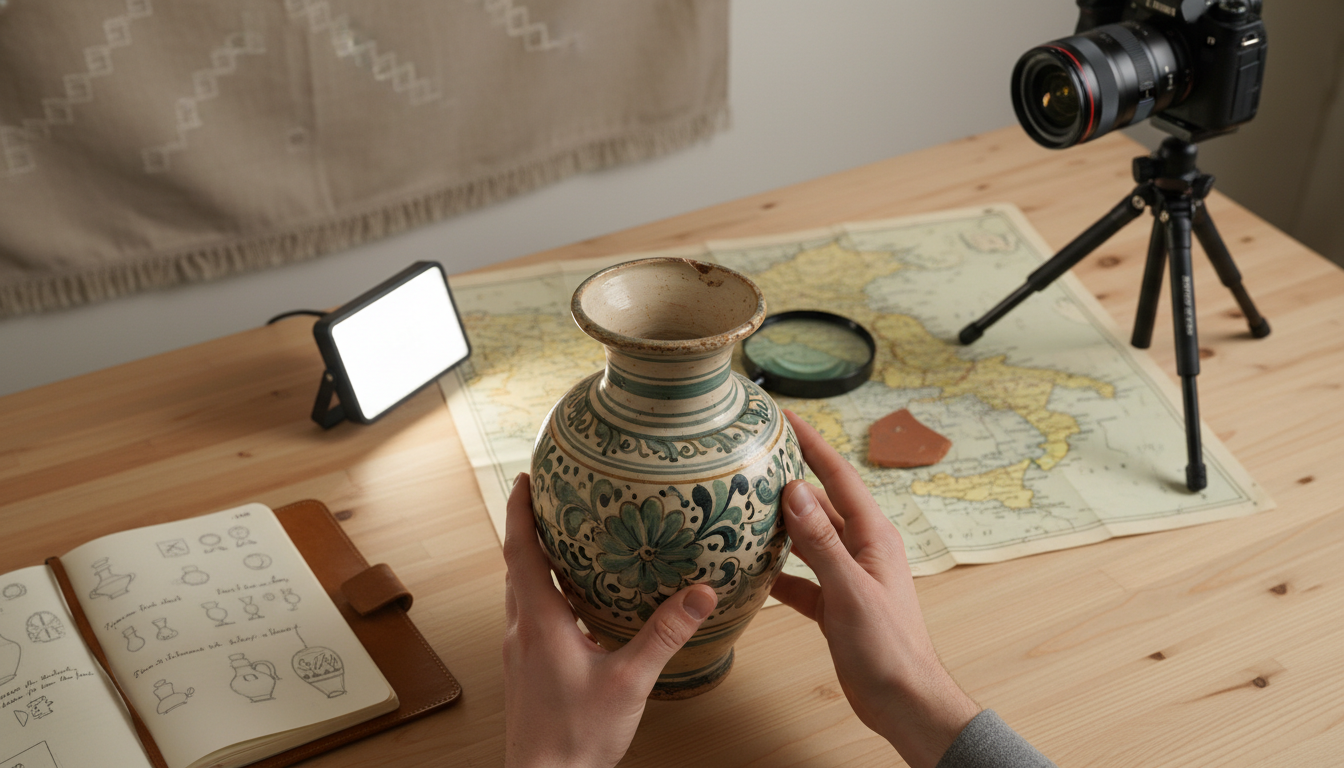
A ceramic vase’s value usually comes from a mix of maker, rarity, age, condition, and design appeal. Start by handling it carefully in good light and work through a quick checklist—marks, materials, craftsmanship, and any signs it’s a sought-after piece.
Turn the vase over and look for a stamped mark, impressed seal, hand-painted signature, studio chop, or country-of-origin text. Clear maker attribution can significantly raise value, especially for known studios or mid-century makers. Also note any model numbers or limited-edition markings.
High-value ceramic often shows intentional design and skilled finishing: crisp edges, balanced proportions, even walls, and a glaze that looks layered or complex rather than flat. Hand-thrown or hand-finished pieces may show subtle throwing rings or small variations that feel deliberate, not sloppy.
Chips, hairline cracks, crazing, stains, and repaired breaks reduce value—sometimes dramatically. Use your fingernail to feel for tiny rim nicks, and check the base for “flea bites.” Restoration can be hard to spot; look for uneven shine, paint touch-ups, or glue lines at fractures.
Older pieces may show consistent base wear, kiln stilt marks, or firing imperfections typical of their era. Any provenance—original receipt, gallery tag, estate paperwork, or a known collection—helps support authenticity and can justify a higher price.
Search for the same maker and similar shape, size, and glaze, then compare against sold prices (not just listings). Small differences in colorway, production period, or condition can swing value widely.
For styling and care tips that help protect ceramic finishes (and keep pieces display-ready), see this modern ceramic vase styling and care guide.
Look for period-typical marks (including older country stamps), consistent age wear on the foot ring, and glazes or forms associated with a specific decade. Comparing the piece to documented examples from known makers is often the fastest confirmation.
Studio pottery by identifiable artists, limited-production runs, iconic mid-century modern forms, and pieces with distinctive glazes (e.g., crystalline, ash, or well-executed matte) tend to command higher prices—especially in excellent condition.
An antique is typically 100+ years old; look for manufacturing traits from earlier eras, honest wear consistent with age, and marks that match historical references. Professional appraisal is worthwhile when the maker or origin suggests high value.






Leave a comment