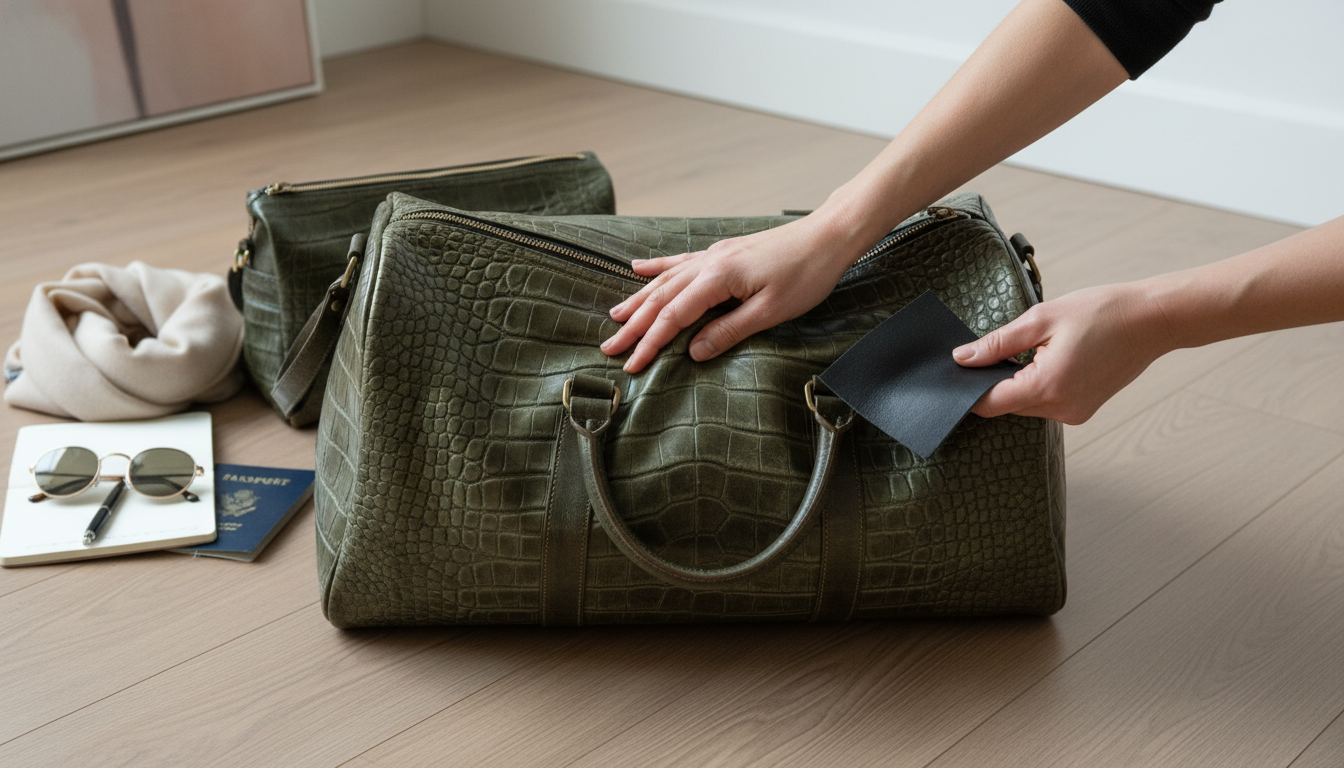
Croc-embossed leather can be soft, but “soft” depends on the base leather and the finish used to create the crocodile pattern. The embossing itself is a stamped texture—so the feel you notice comes from what’s underneath (often cowhide) plus any topcoat applied for shine, protection, or color.
Embossing adds raised and recessed areas that make the surface feel more structured than smooth leather. Those peaks can feel slightly firmer to the touch, especially on new bags, because the pattern is designed to hold crisp definition. Over time, the high points may relax a bit, but the texture will still feel more “grippy” and sculpted than buttery-flat leather.
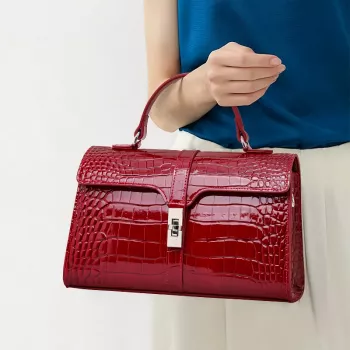
Many croc-embossed styles use a glossy top finish to emphasize the pattern. That shine often comes from coatings that can make the surface feel less supple at first. Structured handbags also frequently use firmer leather panels and reinforcements so the bag keeps its shape, which can translate to a stiffer hand-feel even if the leather quality is high.
Softer croc-embossed leather usually starts with a more pliable base hide and a lighter finish. If the item is designed to slouch—like a relaxed tote or smaller accessory—it may feel noticeably more flexible in the hand. A semi-gloss or matte croc emboss can also feel less “coated” and more naturally leathery.
Look for product descriptions that mention “supple,” “flexible,” or “soft hand.” If you can handle it in person, gently press the surface: soft croc-embossed leather will give slightly and rebound without feeling brittle. For a closer look at how glossy croc-print leather behaves on a structured satchel and how the finish affects the overall look, visit this glossy croc-print leather satchel style guide.
It can show scratches on the raised areas first, especially with high-gloss finishes. Light scuffs are often less noticeable because the texture breaks up wear, but deeper scratches may stand out on shiny surfaces.




Leave a comment