
Yes—crocodile leather is typically costly, often landing in the luxury tier of handbags, shoes, and small leather goods. The price isn’t just about the name; it’s driven by limited supply, stringent processing standards, and the amount of skilled labor required to turn a hide into a polished, usable material.
Crocodile skins are far less common than cowhide, and regulated farming and trade rules can tighten availability further. Fewer usable hides in the market generally means higher prices, especially for consistent, high-grade skins.
Not every part of a crocodile hide is equally desirable. Premium pieces often come from the belly area, where the scale pattern is more uniform. Because makers cut around scars, uneven scaling, and thinner areas, more material can be discarded—raising the cost of each finished item.
Exotic leathers demand careful tanning, dyeing, and finishing to achieve an even color, a smooth hand feel, and a durable surface. That process takes time and expertise, which adds to the final price tag.
Many crocodile leather goods are paired with premium hardware, structured builds, and complex stitching. Features like firm silhouettes, reinforced edges, and secure closures can increase labor time and materials cost, pushing prices higher.
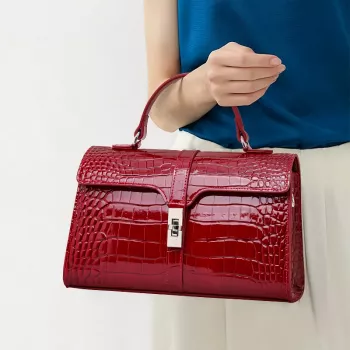
Usually not. Croc-embossed (also called croc-print) leather uses a stamped texture on a more widely available base leather, delivering the look without the pricing and supply constraints of genuine crocodile. If you like that glossy, scaled aesthetic, a croc-print bag can be a style-forward alternative; see more details in this guide: glossy croc print leather satchel style guide.
Cost can make sense when the hide quality is consistent, the craftsmanship is clean (aligned panels, neat edges, solid stitching), and the piece fits how it will be used. For everyday wear, an embossed option may deliver better value, while genuine crocodile is often chosen for collectability, status, and distinctive natural patterning.
Keep it away from prolonged moisture and heat, wipe gently with a soft dry cloth after use, and store it in a dust bag to prevent scuffs. Avoid heavy conditioners unless a specialist recommends them, since some finishes can streak or cloud.





Leave a comment