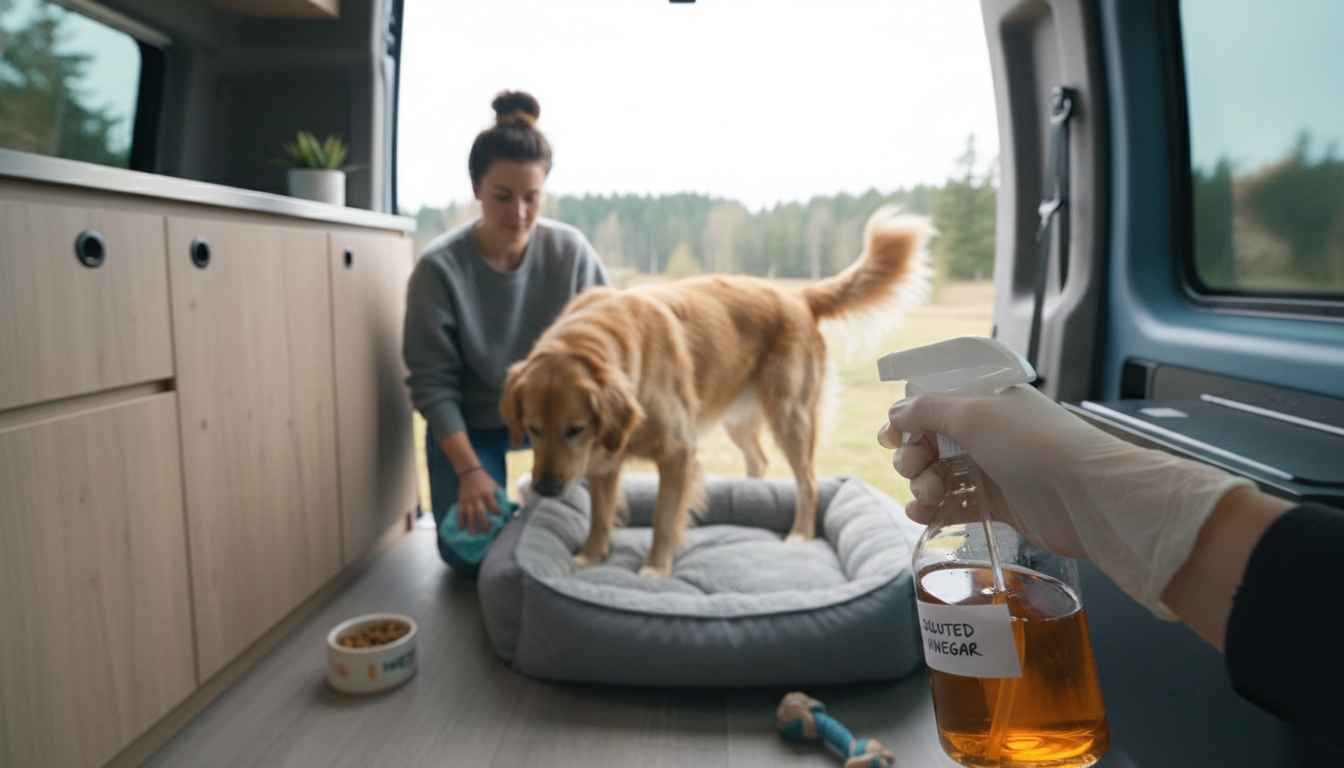
Vinegar is generally considered dog-safe for routine household cleaning when it’s diluted, used on hard, non-porous surfaces, and allowed to fully dry before your dog walks on or licks the area. Most dogs may dislike the strong smell, but the bigger concern is exposure to wet vinegar or concentrated fumes in a poorly ventilated space.
White distilled vinegar and apple cider vinegar are both acidic. That acidity can irritate a dog’s nose, eyes, or skin if the solution is too strong, sprayed near the face, or left puddled where paws can track it. Ingestion of larger amounts may also upset the stomach.
A common approach is mixing vinegar with water for light cleaning jobs. Use it on sealed tile, glass, stainless steel, and other hard surfaces. Avoid using vinegar on natural stone (like marble or granite), unsealed grout, or waxed wood floors because it can etch or dull finishes—damage that may create rough spots where residue collects.
After spraying or mopping, block access until the surface is completely dry. This reduces paw irritation and prevents licking. If your dog tends to lick floors, rinsing with clean water after cleaning can add another layer of caution.
Open windows or run fans, especially when cleaning a small bathroom or laundry room. Spray onto a cloth instead of misting into the air to reduce airborne irritation.
Skip vinegar if your dog has asthma-like symptoms, allergies triggered by strong odors, open sores on paws, or if you’re disinfecting after a contagious illness (vinegar isn’t a reliable hospital-grade disinfectant). For more pet-safe cleaning options and practical home routines, see this guide to pet-safe cleaning.
Fragrance-free dish soap and warm water work well for everyday grime, and an enzymatic cleaner is best for pet urine and odor. For disinfecting, follow a pet-safe product’s label directions and keep pets away until surfaces are dry.





Leave a comment