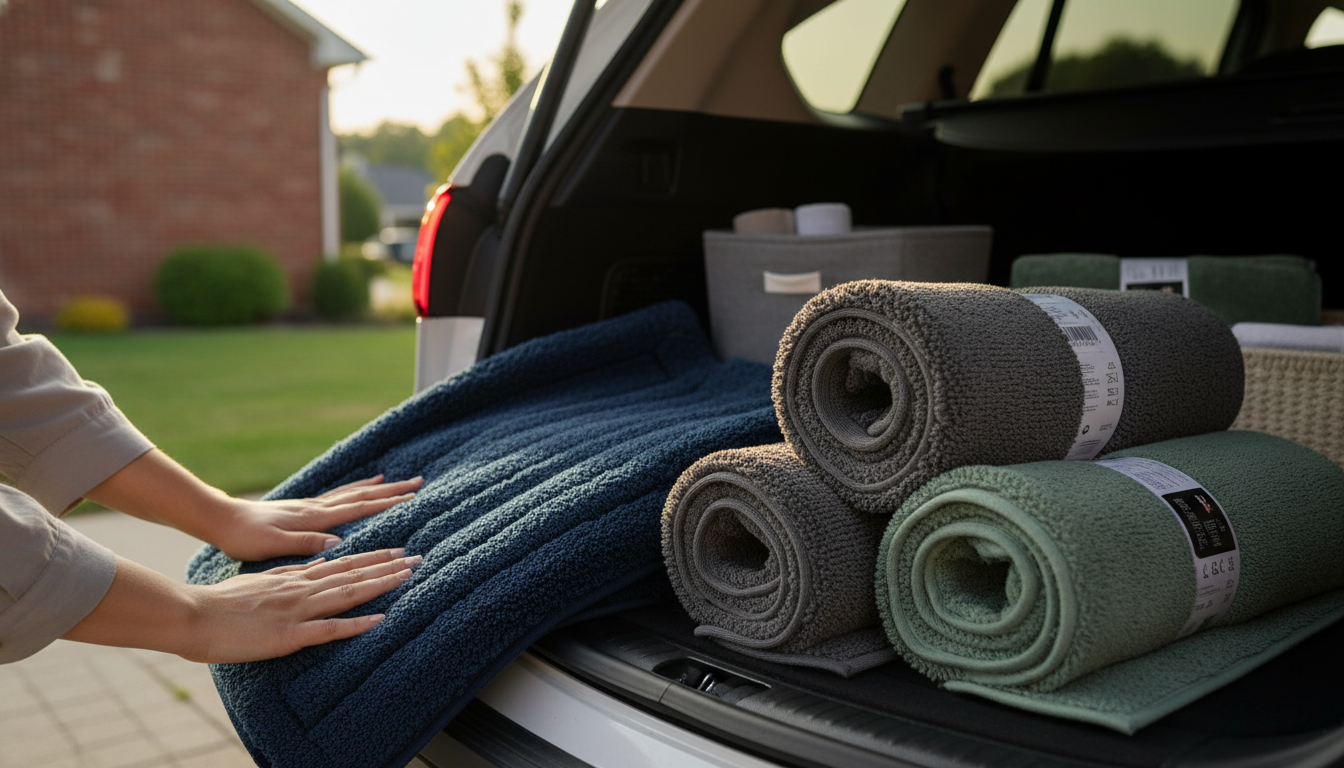
High-low velvet describes a velvet surface that’s intentionally made with two different pile heights. On a bathroom floor mat, that creates a raised-and-recessed pattern you can see and feel—like sculpted stripes, waves, or a subtle motif—rather than a perfectly flat, uniform velvet face.
Instead of cutting every fiber to the same height, the manufacturer varies the pile during weaving, tufting, or finishing. The “high” sections stand taller and feel plush, while the “low” sections sit closer to the backing and feel smoother. The result is a textured velvet that looks more dimensional under bathroom lighting and tends to show pattern definition better than standard velvet.
A high-low velvet bath mat usually feels soft overall, but with noticeable texture. The raised areas can feel cushier, while the lower areas feel denser and a bit more supportive. Many people like it because it gives a gentle “massage-like” sensation and helps your feet find traction on the surface as you step out of the shower.
It can. The taller pile zones can hold more water on contact, while the lower zones may allow a bit more airflow at the surface. That said, real-world performance depends more on the mat’s core material, backing, and thickness than the pattern alone. If you’re comparing mats, also check whether it’s labeled as quick-dry, how dense the pile is, and whether it has a non-slip backing.
Not necessarily, but the texture can trap lint or hair a bit more than a flat surface. Regular shaking, vacuuming (gentle setting), and following the care label usually keeps it looking crisp. If you want a deeper look at plush velvet bath mat construction and features, see the main guide here: https://mrsmattie.com/guide-fruit-plush-velvet-non-slip-bath-mat/.
Velvet refers to a fabric finish with a soft, short pile and a smooth look, while microfiber is a fiber type often used to make highly absorbent, quick-drying mats. A mat can sometimes use microfiber yarns but be finished to feel velvety.





Leave a comment