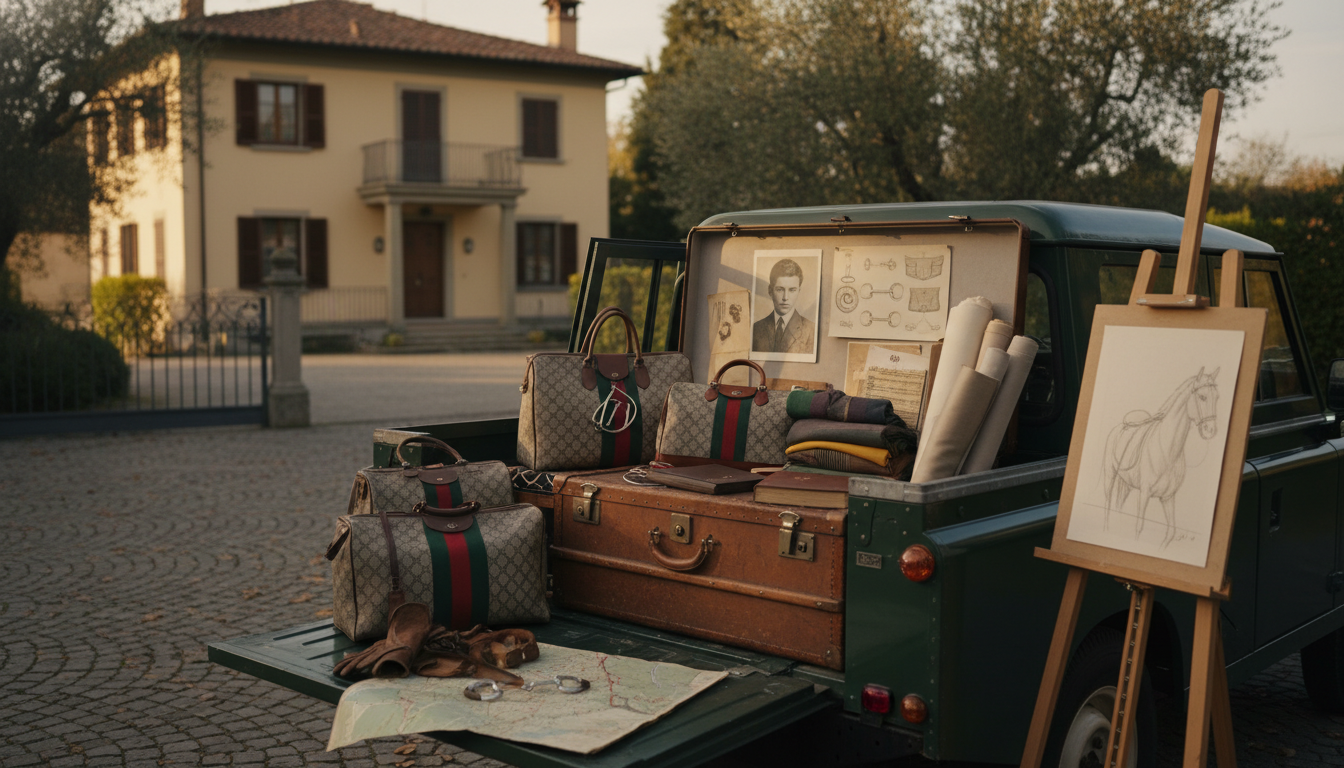
Guccio Gucci (1881–1953) is the founder of the House of Gucci, and his story starts with a sharp eye for what wealthy travelers wanted: refined craftsmanship that could handle real life. Born in Florence, he worked in hospitality and spent time in London, where exposure to luxury luggage and well-dressed guests helped shape his sense of style and service. When he returned to Italy, he applied those observations to leather goods—pieces designed to feel elevated but remain practical.
In 1921, Guccio opened his own shop in Florence, focusing on fine leather accessories and luggage. As the brand grew, Gucci’s workshop became known for clean lines, durable materials, and artisan finishing—hallmarks that later turned into unmistakable signatures. During periods when materials were limited, the company leaned into ingenuity, using alternative components and construction techniques that still looked premium, helping establish the brand’s reputation for creative problem-solving.
Many of the details people now associate with Gucci trace back to that early emphasis on equestrian-inspired elegance and functional design. Over time, these cues evolved into recognizable house codes—like the Horsebit, bamboo handles, the Web stripe, and the GG motif—each reflecting a blend of heritage, utility, and status. For a deeper look at how these Gucci codes developed and how to recognize them on different pieces, visit this guide to Gucci codes explained.
Guccio’s legacy isn’t just that he started a luxury label; it’s that he built a design language grounded in Florentine craft and shaped by global taste. That foundation allowed Gucci to expand beyond luggage into a full fashion house, with enduring symbols that still anchor the brand today.
Guccio Gucci died in 1953. After his death, the company continued under family leadership and expanded internationally, building on the leather-goods foundation he established.
He had six children. Several of his sons went on to play major roles in the business as Gucci grew.







Leave a comment