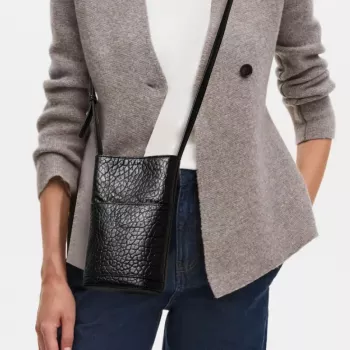
“Real leather” is usually the better pick when the label is used to mean higher-grade leather (like full-grain or top-grain). “Genuine leather” is real animal leather too, but the term is commonly used for lower-grade hides made from the layers left after top-grain is removed. For most shoppers, the difference shows up in how long the item lasts, how it ages, and how it feels in daily use.
Real leather is a broad, informal phrase. Sellers often use it to signal that the product isn’t faux leather. When the listing also specifies full-grain or top-grain, that’s a strong sign you’re getting a more durable, better-looking material that develops a rich patina over time.
Genuine leather is also real leather, but it’s frequently made from split leather or lower layers of the hide that are then coated or finished to look more uniform. It can still be perfectly serviceable, especially for occasional use, but it often won’t age as gracefully and may show wear sooner at high-friction points like corners, straps, and edges.
If you want a bag that keeps its character for years—softening, darkening slightly, and gaining a broken-in look—choose a product described as full-grain or top-grain leather rather than relying on the phrase “genuine leather.” These higher grades typically resist peeling and cracking because they rely less on heavy surface coatings.
If the goal is a lower price for a style you may rotate seasonally, “genuine leather” can be a practical option. Look for reinforced stitching, sturdy hardware, and clean edge finishing; construction matters as much as material grade for everyday durability.
Check the product description for leather grade (full-grain/top-grain), lining materials, strap attachment points, and edge paint quality. If the surface looks overly plastic-shiny or perfectly uniform, it may be heavily coated—common with lower-grade “genuine leather.” A mild natural variation in texture is often a good sign.
For more detail on choosing leather for compact bags and everyday carry, visit this guide.
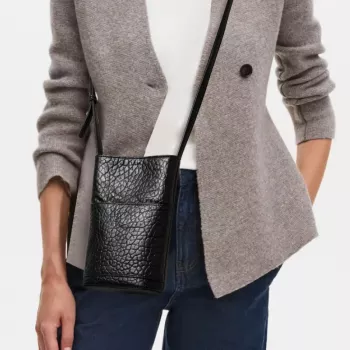
Full-grain usually shows natural texture and pores, with slight variation across panels. Coated leather often looks very uniform and may feel more slick or plastic-like, especially on high-shine finishes.




Leave a comment