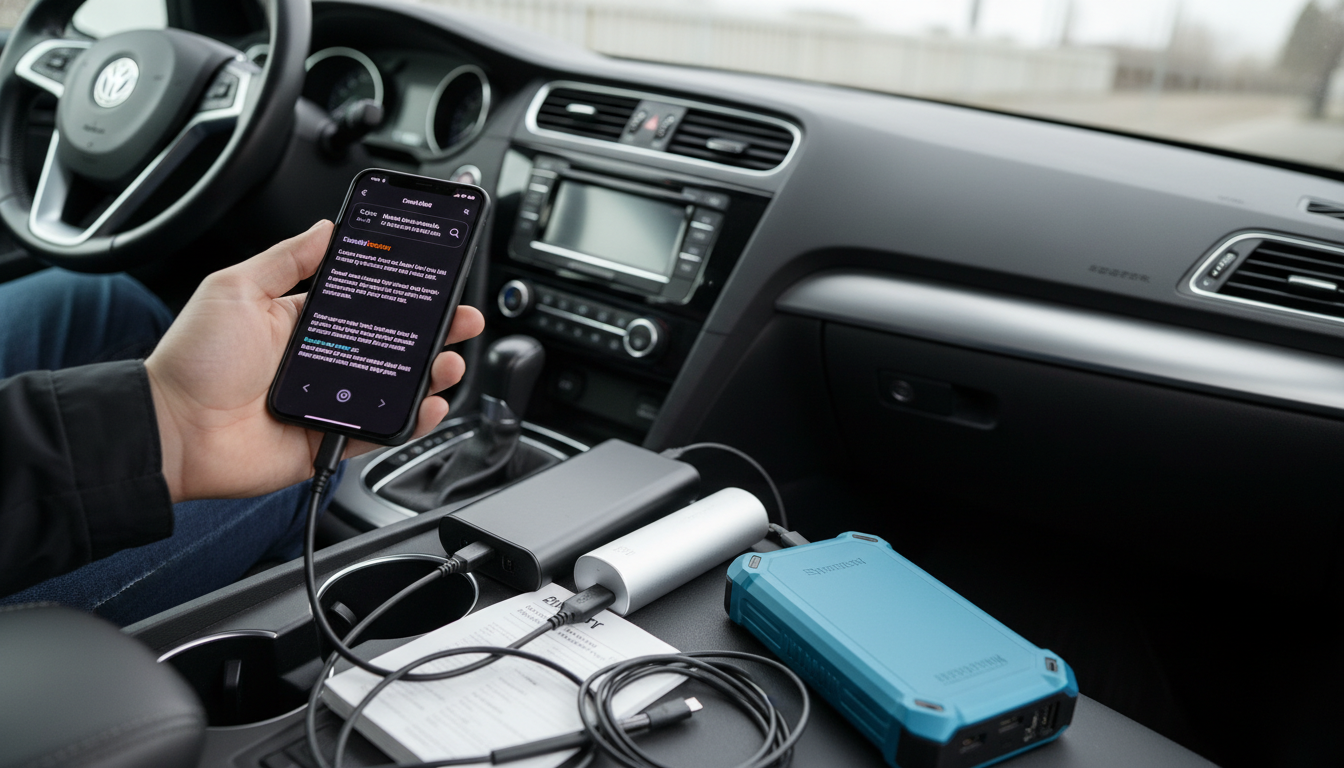
Start by matching the power bank to how you actually use your phone: how many full charges you need, how fast you want to recharge, and how portable it must be. The “best” power bank is the one that fits your device’s charging standards and your daily routine without adding unnecessary bulk.
A good baseline for most phones is 10,000mAh for a pocketable option and 20,000mAh if you want multiple charges or you travel often. Keep in mind you won’t get 100% of the listed capacity due to normal conversion loss, so a 10,000mAh model typically delivers fewer than two full phone charges depending on your battery size.
Capacity determines how many charges you get; output determines how quickly you get them. Look for power delivery that matches your phone and cable: USB-C Power Delivery (PD) is common for modern phones, while some Android models may support proprietary fast-charging modes. If you have a Samsung device, choose a power bank that specifically supports Samsung fast charging (often labeled “Super Fast Charging”/PD PPS) to get the speeds your phone is capable of.
Decide whether you need USB-C, USB-A, or both. A dual-port power bank can charge a phone plus earbuds or another device, but shared output may slow charging when two items are plugged in. Also check whether the bank can be recharged via USB-C (usually faster and more convenient than micro-USB).
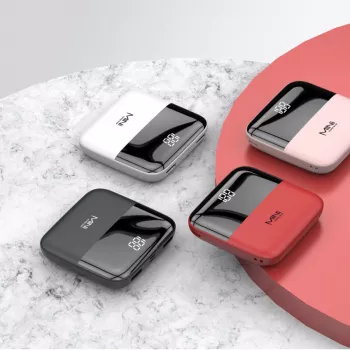
Higher capacity usually means more weight. If you carry it daily, a slim “mini” style is easier to live with. Prioritize safety basics like over-current, over-voltage, and temperature protection, and buy from reputable sellers with clear specs.
For a practical breakdown of a compact dual-USB option with Samsung fast-charging considerations, see the full guide here: mini dual USB power bank guide.
For travel, 20,000mAh is a popular choice because it can handle multiple phone recharges and accessories. If you want something lighter for day trips, 10,000mAh is often enough for emergencies and a top-up or two.





Leave a comment