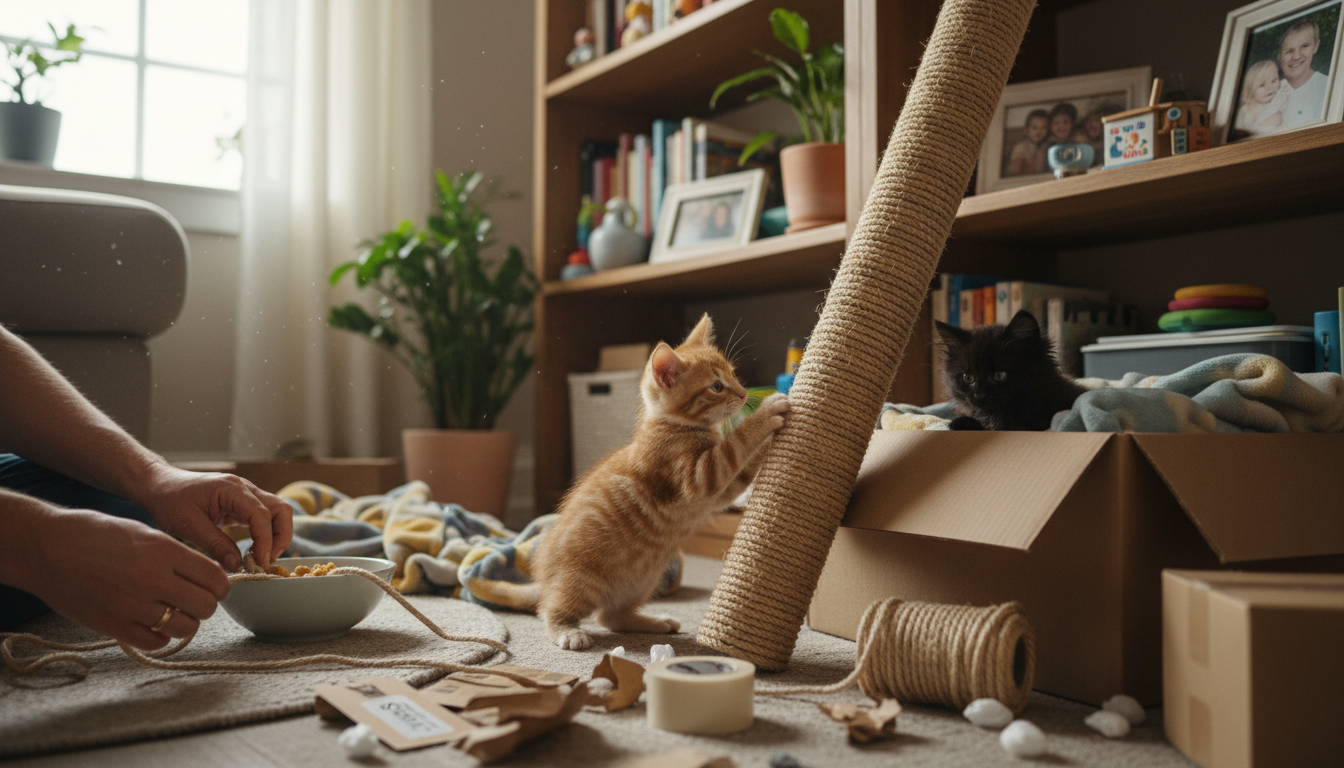
Sisal rope is generally safe for kittens when it’s tightly wrapped, securely attached, and kept in good condition. Sisal (a natural plant fiber) is commonly used on scratching posts and cat trees because it’s durable and gives cats a satisfying surface to claw. The main safety concerns come from loose strands, fraying, adhesives, and any small parts near the rope that a curious kitten could chew or swallow.
Look for sisal that’s wrapped densely with no gaps and anchored well at the ends so it can’t unravel. A stable base matters, too—kittens can be wobbly climbers, and a tipping post can cause injuries. If the sisal is on a cat tree with toys attached, confirm the toy strings and attachments are short, sturdy, and hard to pull off.
Frayed sisal can create long, string-like fibers that kittens may ingest. Swallowed fibers can irritate the stomach, and in worst cases, strings can contribute to intestinal blockages. Sisal can also become a problem if it’s glued with strong chemical odors or if staples/tacks are exposed anywhere near the wrap.
For a kitten-appropriate setup that balances climbing, scratching, and stability, see this guide on a compact dual-tier sisal cat tree: https://mrsmattie.com/blog/guide-compact-dual-tier-sisal-cat-tree-kittens-hanging-ball/.
Redirect chewing to safe kitten chew toys and add play sessions to burn energy before solo time on the cat tree. If chewing persists, limit unsupervised access until the habit fades and replace any rope that starts to unravel.







Leave a comment