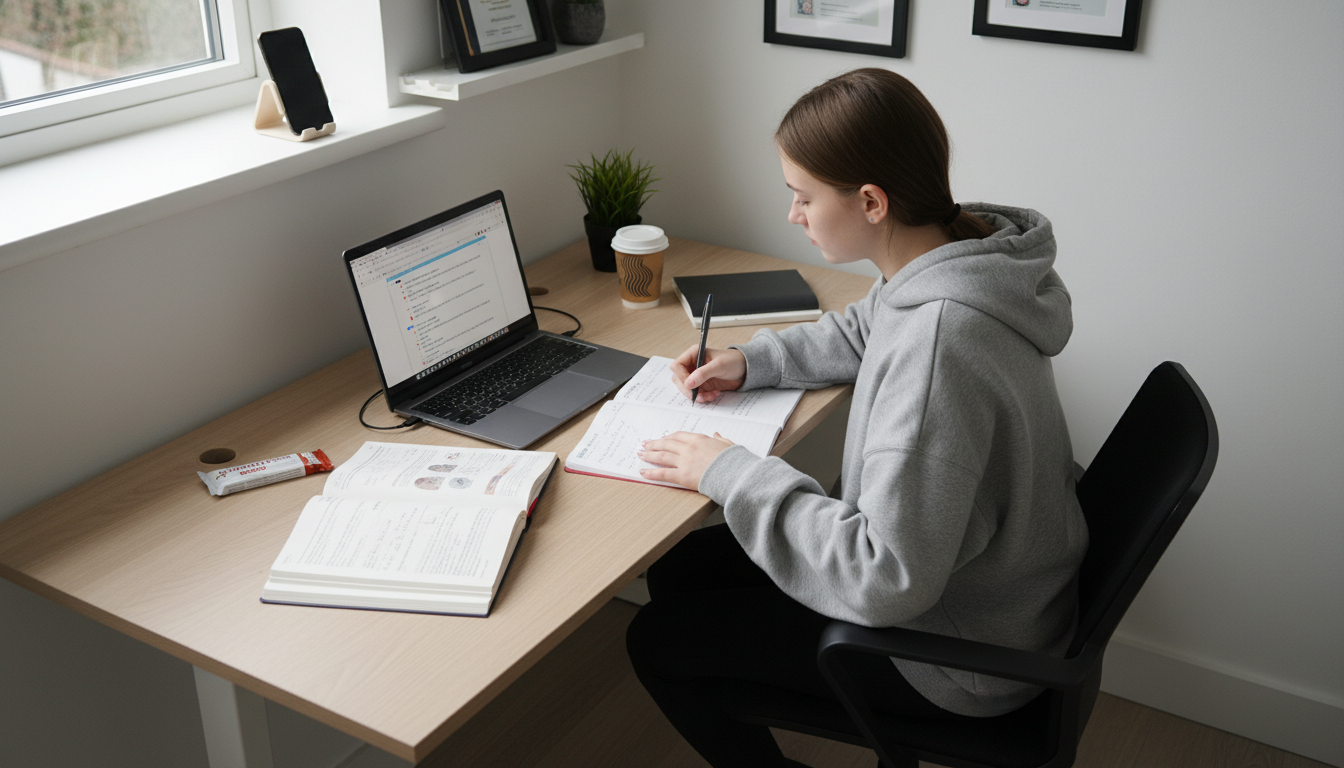
Realistic screen time rules for teens start by separating “school-required” screen use from “leisure” screen use. If homework needs a laptop, the goal isn’t an arbitrary total-hour cap—it’s building boundaries that protect sleep, focus, and mental health while still letting them complete assignments.
Ask your teen to estimate typical school-related computer time on weeknights, then set a separate daily allowance for entertainment (social media, gaming, streaming). Many families find 1–2 hours of leisure screen time on school nights is workable, with more flexibility on weekends if responsibilities are handled.
Pick non-negotiable times when screens are off, regardless of purpose unless truly urgent: during meals, during family time, and the last 60–90 minutes before bed. That last block is especially important for sleep quality and next-day attention.
Homework goes best in a shared, well-lit spot (kitchen table or living room) rather than behind a closed bedroom door. If a bedroom is the only option, keep the door open and use website/app blockers during study blocks to limit “quick checks” that turn into lost hours.
Try a predictable flow: homework first, then leisure, then screens off. If your teen has heavy assignments, use timed focus sessions (like 25–45 minutes on, 5–10 minutes off) and allow breaks that don’t default to scrolling.
Agree on what “done” means (assignments submitted, study completed, backpack packed). Revisit the plan every 2–4 weeks, especially during exam periods or sports seasons. For more ideas on practical boundaries that support better sleep and healthier habits, see this guide: healthy teen screen time boundaries.
Watch for trouble falling asleep, difficulty waking, daytime irritability, or sleeping in heavily on weekends. A consistent screens-off window before bed for two weeks can help you see whether sleep improves.







Leave a comment