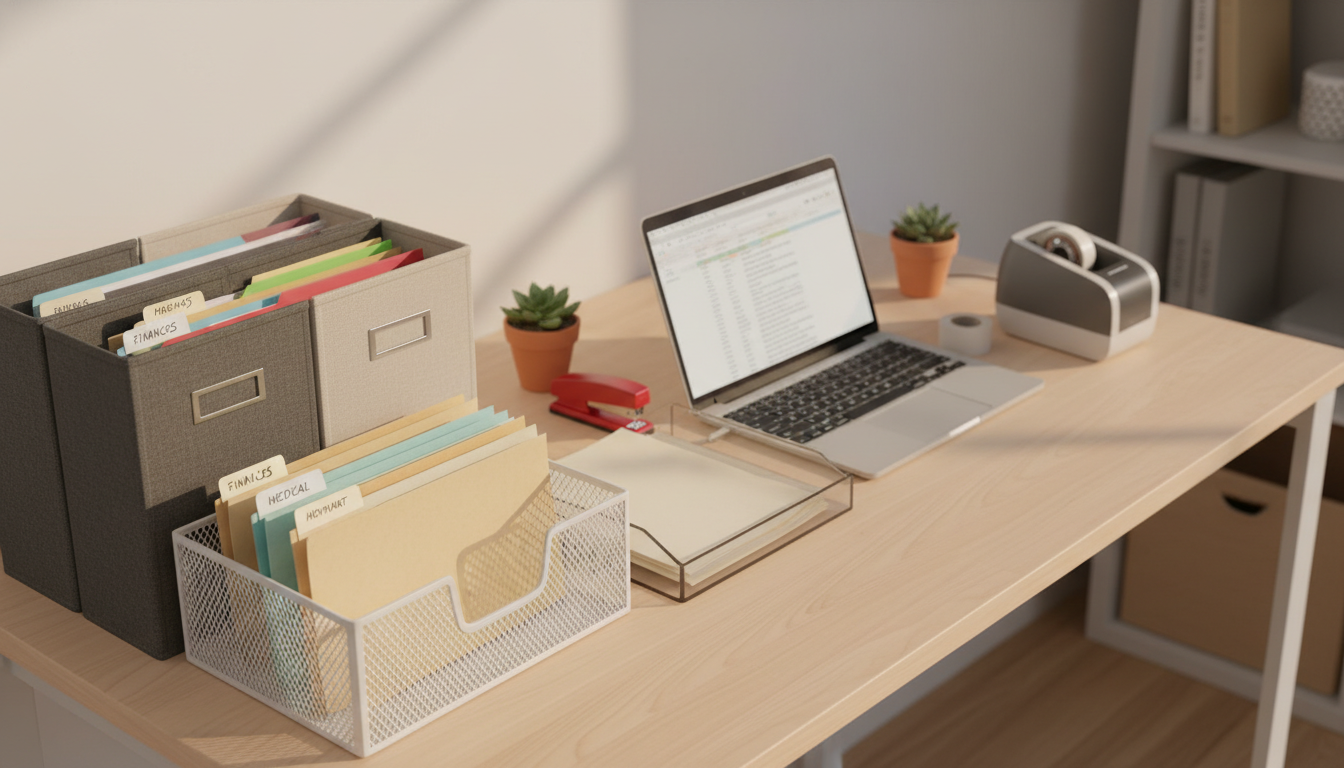
A home filing system is a simple, repeatable way to sort, store, and find important household paperwork—without digging through piles. It usually combines a set of categories (like “Medical” or “Taxes”), a place to keep active papers (like a file box or drawer), and a routine for handling new documents as they arrive.
The goal is speed and consistency: papers go into the right spot the first time, and you can retrieve them quickly later. Most systems use labeled folders grouped by topic, with a small “inbox” area for papers that need action. Once handled, items are either filed, scanned, or discarded.
A functional home filing system typically covers:
Physical filing is ideal for originals you must keep and documents you grab often. Digital filing helps reduce clutter and makes backup easier. Many households use a hybrid: keep critical originals in a protected folder or safe, and scan everything else into clearly named digital folders.
The best system is the one you’ll use. Limit the number of categories, label everything clearly, and set a quick weekly or monthly “file and shred” session. For a practical checklist and category ideas, see the full guide here: simple home filing system checklist.
Keep legal and identity documents permanently, tax records for at least 3–7 years (depending on your situation), and warranties/receipts as long as the item is owned or the coverage period lasts. When in doubt, keep it until the related account, obligation, or coverage is fully closed.






Leave a comment