Discover the Quiet Influence of Hermès in Fashion
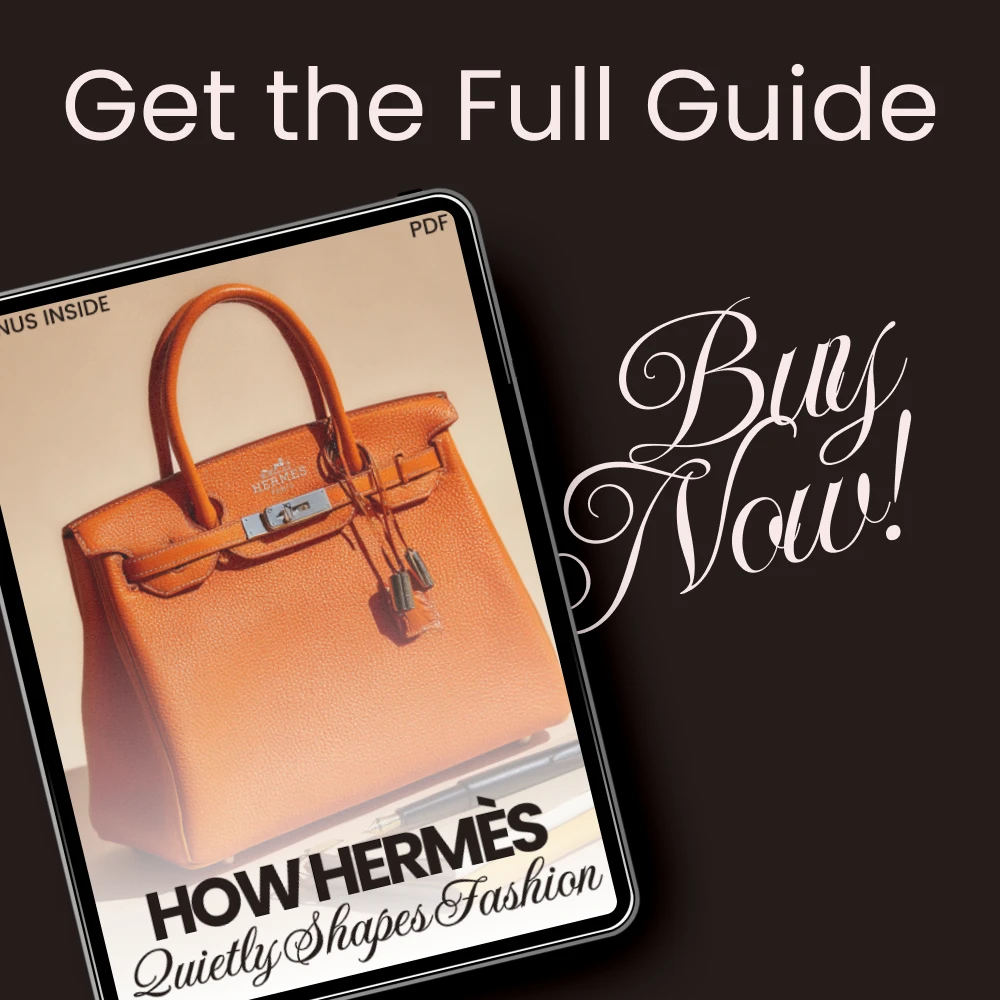
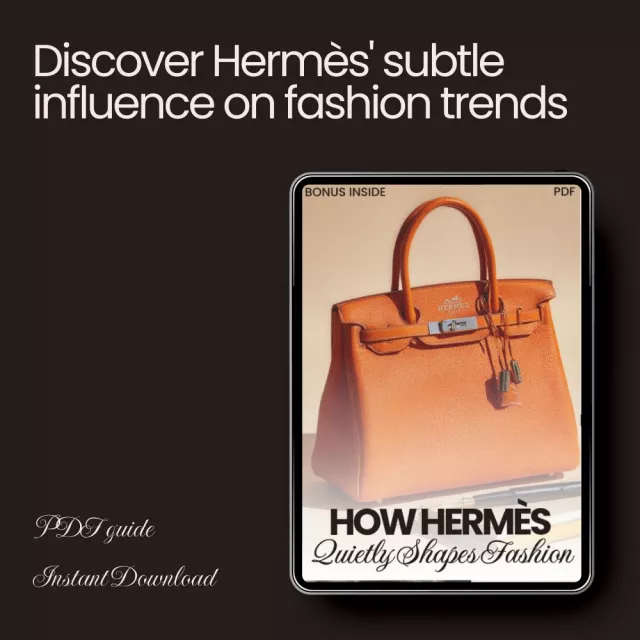
Step into the world of Hermès, a brand synonymous with timeless luxury, where every piece is more than just a product—it’s a trend-setting statement. In our exclusive guide, “How Hermès Quietly Shapes Fashion,” you’ll uncover how this iconic brand’s subtle yet powerful influence ripples through the fashion world. From the elegance of the Birkin to the quiet luxury revolution, this digital download reveals how Hermès sets the tone for fashion trends in ways that go beyond what meets the eye. If you’ve ever wondered how luxury brands like Hermès impact the fashion industry, this guide is for you.
In this digital guide, you’ll get insights into the psychology of fashion trends, signature elements that make Hermès unique, and practical lessons for anyone in the fashion industry. Whether you’re a designer, fashion enthusiast, or someone who simply loves luxury, this guide offers invaluable knowledge you won’t find anywhere else. Learn how to track trends and incorporate the wisdom of Hermès brand influence on trends into your own creations or predictions.
Key Features of the Guide
- Chapter 1: The Hidden Power Behind Hermès Trends – Understanding why Hermès sets the fashion agenda.
- Chapter 2: Signature Elements That Ripple Through Fashion – Learn how Hermès’ colors, materials, and silhouettes shape the modern fashion landscape.
- Chapter 3: Where Brands Misread the Hermès Playbook – Common mistakes in following luxury leaders and lessons for creators.
- Chapter 4: Using AI to Track and Predict Luxury Trends – Leverage the power of AI for predicting fashion trends influenced by luxury brands like Hermès.
Who This Guide is For
This guide is perfect for designers, creators, and anyone fascinated by the intersection of luxury fashion and trendsetting. If you’re looking to understand how Hermès brand influence on trends shapes the fashion world, this is the resource you need. You’ll find strategic insights whether you’re working in fashion design, retail, or just looking to understand the forces behind luxury trends.
Why This Guide is Different
Unlike other fashion trend guides, “How Hermès Quietly Shapes Fashion” takes a deep dive into the psychology of quiet influence and how Hermès uses its heritage to create lasting trends. You’ll get practical insights that go beyond surface-level trends, helping you to understand the slow authority of luxury fashion. This isn’t just about following trends; it’s about understanding the long-term strategy behind them. It also explores how AI tools can be used to predict fashion movements, making this guide a must-have for forward-thinking fashion professionals.
Practical Benefits
- Gain a deeper understanding of how Hermès shapes the fashion world.
- Learn how to use AI tools for trend mapping and prediction.
- Discover the psychology behind luxury trends and how to apply this knowledge to your own work.
- Understand how quiet luxury continues to influence modern accessories.
- Implement smart lessons for avoiding common mistakes when following luxury leaders.
Take the Next Step in Fashion Insight
Ready to learn the secrets behind Hermès brand influence on trends and how it quietly shapes the fashion world? Don’t wait—download this powerful guide now and start mastering the art of trend forecasting and luxury fashion strategy today!
Order cancellation
All orders can be cancelled until they are shipped. If your order has been paid and you need to make a change or cancel an order, you must contact us within 12 hours. Once the packaging and shipping process has started, it can no longer be cancelled.
Refunds
Your satisfaction is our #1 priority. Therefore, you can request a refund or reshipment for ordered products if:
- If you did not receive the product within the guaranteed time( 45 days not including 2-5 day processing) you can request a refund or a reshipment.
- If you received the wrong item you can request a refund or a reshipment.
- If you do not want the product you’ve received you may request a refund but you must return the item at your expense and the item must be unused.
We do not issue the refund if:
- Your order did not arrive due to factors within your control (i.e. providing the wrong shipping address)
- Your order did not arrive due to exceptional circumstances outside the control of Mrs Mattie (i.e. not cleared by customs, delayed by a natural disaster).
- Other exceptional circumstances outside the control of https://mrsmattie.com
*You can submit refund requests within 15 days after the guaranteed period for delivery (45 days) has expired. You can do it by sending a message on Contact Us page
If you are approved for a refund, then your refund will be processed, and a credit will automatically be applied to your credit card or original method of payment, within 14 days.
Exchanges
If for any reason you would like to exchange your product, perhaps for a different size in clothing. You must contact us first and we will guide you through the steps.
Please do not send your purchase back to us unless we authorise you to do so.
Your files will be available to download once payment is confirmed.



Authority momentum — this guide finally named something I'd sensed but couldn't articulate.
Six years in accessories retail and I'd never framed the Birkin's influence in terms of how it shifted resale and durability thinking across price tiers. The investment-piece logic explained here maps directly onto how I'm repositioning my own accessories line. Solid read 👌
Heritage reinterpretation as influential as futuristic innovation — that idea landed.
Two years ago I launched a small leather goods brand and burned through three separate aesthetic pivots in my first eighteen months. Every time quiet luxury appeared trending I'd scramble to adjust, and every time the result looked rushed and inconsistent — my repeat customer rate was terrible. I stumbled on this guide while doing positioning research and finished it in one sitting. The explanation of how scarcity and consistency build symbolic value rather than advertising saturation completely reframed my approach. The distinction between copying Hermès aesthetics and copying the discipline behind them was the sharpest diagnosis of my own mistakes I'd ever read. I overhauled my brand around a single clear visual language — warm neutrals, natural grain leather, no seasonal pivots — and within six months my average order value climbed by nearly forty percent. The point about pacing growth so demand slightly exceeds supply gave me the confidence to stop over-discounting. This guide costs almost nothing and reoriented my entire brand strategy.
What struck me most was the argument that true trend leaders shape the market years before the mainstream recognizes them. Seeing the quiet luxury wave contextualized as a delayed echo of what Hermès had been modeling for decades made the whole 2022–2024 moment feel far less random. Very clear writing throughout.
Strong on brand philosophy, lighter on AI specifics — but the trend-cycle thinking delivers.
Hermès' warm neutral palette — camel, cream, deep brown, muted gold — rippling into minimalist wardrobes years later was more concrete than I expected from a brand strategy discussion. Most writing on luxury influence stays vague; this actually traces the mechanism.
💡👜⭐
I study trend forecasting at a design school and brought this into a seminar discussion on luxury influence cycles. The concept of authority momentum — where each season reinforces rather than resets a brand's visual language — sparked the most engaged debate we'd had all semester. My professor, who spent fifteen years at a major European house, said the framing around slow authority vs fast novelty was the clearest articulation she'd seen of something practitioners understand intuitively but rarely explain well. The prompt strategy in the AI section is underused; asking an AI to compare your brand's visual identity against quiet luxury signals is exactly the kind of structured question most young designers haven't thought to formulate 🎯 I've already shared this with three classmates developing thesis collections.
Saddle-inspired hardware spreading to mass market years later — I'd never traced it back.
The psychological framing around why selective, controlled brands get higher symbolic value assigned to their choices is compelling and well-argued. What I wanted more of was concrete examples beyond the Birkin — the guide touches on silhouettes and tailoring but doesn't go as deep there as it does with accessories. Still worth your time.
Read it twice — brand memory weakening through seasonal pivots hit closer than I expected.
The case study tracing the quiet luxury surge of 2022–2024 back to design codes that had lived in the Hermès universe for decades is one of the more satisfying explanations of how trend cycles actually work. It reframes what felt like social media spontaneity as something far more structural. Useful perspective shift.
I manage brand development for a mid-market leather accessories company and used this guide to structure a team workshop on positioning. The section comparing fast-cycle brands that depend on novelty with Hermès' repetition-and-refinement approach prompted an uncomfortable conversation about how often we'd pivoted in the past three years — the honest answer was four times. The argument that consistent visual language builds recognition faster than frequent aesthetic shifts gave us a shared vocabulary to start the rebrand conversation we'd been avoiding. We've since committed to a defined color palette and a no-aesthetic-pivot policy for at least two full production cycles. Early signals from wholesale buyers are positive.
Natural grain finishes vs overly processed materials — that detail is still rattling around 🧠
Explaining how Hermès builds desire through scarcity and cultural positioning rather than advertising saturation made me question where I've been over-investing for my own label. The guide is short enough to finish in one sitting and dense enough that you'll pause to take notes.
Solid framework on luxury influence — the AI section reads more as orientation than instruction.
The distinction between copying Hermès aesthetics and copying the discipline behind them is the line I'll be quoting for a while. Most brands that try to ride quiet luxury trends get the neutral palette right and miss everything else — this guide explains exactly why that happens.
🔥🛍️👌✨
I graduated from fashion school two years ago and spent most of my first year convinced that constant reinvention was a marker of creative credibility. This guide delivered a direct challenge to that assumption — the argument that selective evolution compounds brand recognition while dramatic seasonal resets weaken brand memory was uncomfortable to read because I recognized my own portfolio in it. The equestrian heritage section also reframed how I think about my own family's craft background in textile weaving; I'd been treating it as irrelevant to my contemporary direction, and this made me reconsider whether that heritage could function as strategic credibility rather than something to leave behind. There's something rare about writing that changes what you think you're building toward.
The pattern of structured yet understated silhouettes gaining traction across multiple brands after appearing in Hermès collections first is easy to dismiss as coincidence until you look back at even three runway seasons 🔍 This guide gives you the framework to stop reading those patterns as accidental.
Good framing on slow authority — the AI prompting section could've gone much further.
The observation that material direction and color discipline predict broader market movement earlier than headline runway moments sounds obvious once you read it, but it changes what you actually pay attention to each season. I've started tracking leather texture choices in new collections differently because of this.
Finishes in under an hour, but reshapes how you think about brand authority.
I run a small editorial platform focused on emerging luxury and independent fashion, and for about eighteen months I'd been writing about quiet luxury as though it were a social media trend that emerged from TikTok aesthetics and celebrity styling. My coverage was reactive and surface-level, and my audience could tell — engagement on those pieces was lower than almost everything else I published. Reading this guide reoriented my entire editorial frame. The argument that quiet luxury was actually a delayed popularization of visual codes Hermès had been building for decades gave me an entirely different story to tell — not the trend itself, but the mechanism behind it. The section on the Birkin's role in reshaping how consumers think about accessories as investment objects was particularly useful because it connected design to an economic psychology shift I'd been covering separately without making the link. I rewrote two pieces using this framework and both performed better than anything I'd published that quarter. The approach to AI prompting as strategic questioning rather than casual experimentation also changed how I brief contributors — I now ask them to frame research as strategic questions before they write, which has improved pitch quality noticeably. The guide is deceptively short for how much it shifts.