Unlock the Secrets Behind Louis Vuitton’s Iconic Brand Evolution
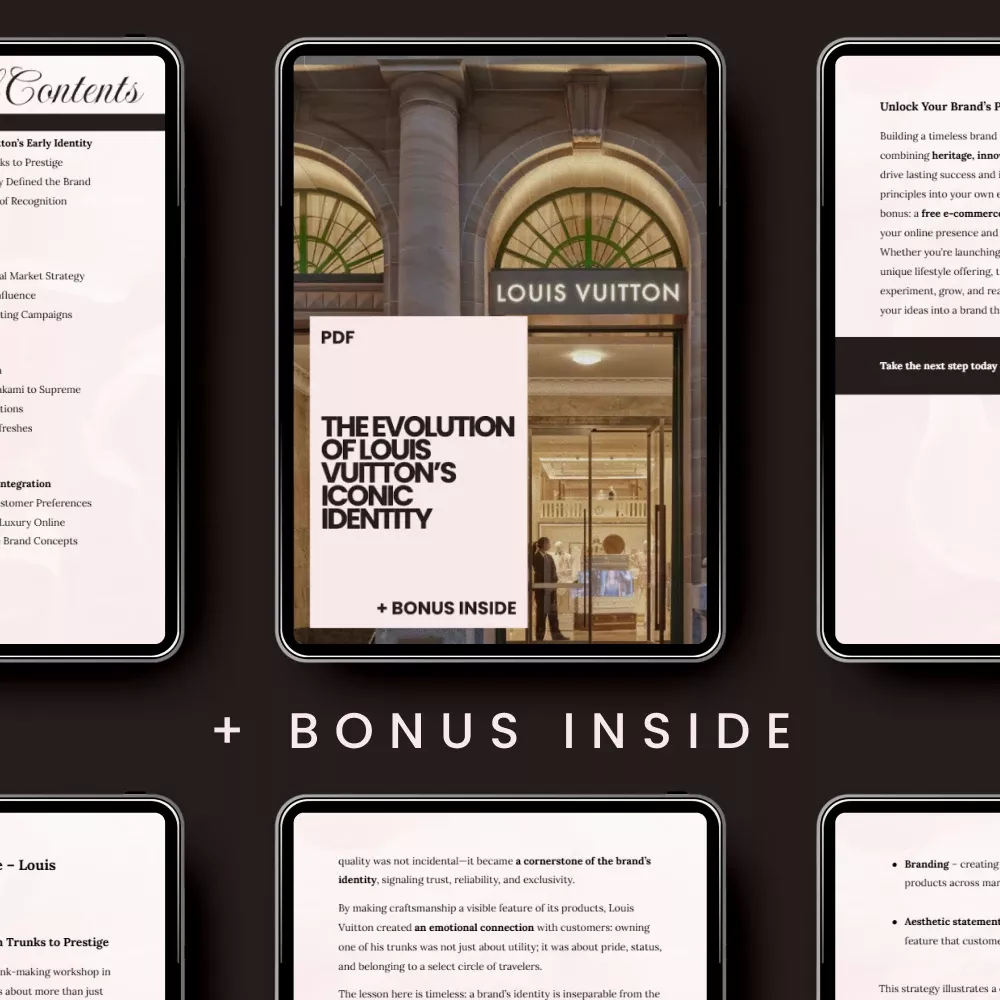
Discover the fascinating journey of one of the world’s most recognized luxury brands with “The Evolution of Louis Vuitton’s Iconic Identity.” This eBook takes you through the transformation of Louis Vuitton from its humble beginnings to becoming a global icon in fashion. Learn how the brand’s rich heritage and constant reinvention have shaped its prestigious identity over time. Whether you’re a brand strategist, a fashion enthusiast, or a business owner, this detailed guide provides invaluable insights into the evolution of Louis Vuitton’s brand identity.
Key Features:
- In-depth exploration of Louis Vuitton’s origins and early identity
- Case studies on the brand’s marketing strategies and celebrity endorsements
- Exclusive insights on collaborations with renowned artists like Takashi Murakami and Supreme
- A look at how Louis Vuitton embraced digital transformation and AI in design
- Comprehensive lessons on maintaining heritage while embracing modern trends
- Practical steps for applying Louis Vuitton’s branding strategies to your own brand
Why Choose This eBook?
This eBook stands out for its deep dive into Louis Vuitton’s brand identity evolution, providing more than just historical facts. It goes beyond surface-level analysis by offering actionable lessons and practical takeaways for emerging brands. With real-life case studies, the guide shows how Louis Vuitton’s early logos, celebrity connections, and strategic collaborations helped define its iconic identity. Additionally, you’ll explore the modern approaches the brand uses to stay relevant in the digital age.
Who is This eBook For?
This guide is perfect for:
- Brand managers and marketers looking to learn from the best
- Fashion enthusiasts curious about the evolution of a luxury brand
- Entrepreneurs and startups aiming to build a memorable, lasting brand identity
- Anyone interested in the intersection of art, design, and business strategy
Practical Benefits:
- Understand how Louis Vuitton’s early identity set the stage for global success
- Learn how to balance traditional craftsmanship with modern trends
- Gain a clear understanding of the role of collaborations in strengthening brand identity
- Discover the key to maintaining brand relevance in an increasingly digital world
- Receive actionable insights on applying Louis Vuitton’s strategies to your brand
Get Your Copy Today!
Ready to learn how Louis Vuitton revolutionized the world of branding? Download “The Evolution of Louis Vuitton’s Iconic Identity” now and uncover the powerful strategies that helped turn a small trunk maker into a global luxury giant. Don’t miss out on this chance to gain expert-level insights that will set your brand apart!
Order cancellation
All orders can be cancelled until they are shipped. If your order has been paid and you need to make a change or cancel an order, you must contact us within 12 hours. Once the packaging and shipping process has started, it can no longer be cancelled.
Refunds
Your satisfaction is our #1 priority. Therefore, you can request a refund or reshipment for ordered products if:
- If you did not receive the product within the guaranteed time( 45 days not including 2-5 day processing) you can request a refund or a reshipment.
- If you received the wrong item you can request a refund or a reshipment.
- If you do not want the product you’ve received you may request a refund but you must return the item at your expense and the item must be unused.
We do not issue the refund if:
- Your order did not arrive due to factors within your control (i.e. providing the wrong shipping address)
- Your order did not arrive due to exceptional circumstances outside the control of Mrs Mattie (i.e. not cleared by customs, delayed by a natural disaster).
- Other exceptional circumstances outside the control of https://mrsmattie.com
*You can submit refund requests within 15 days after the guaranteed period for delivery (45 days) has expired. You can do it by sending a message on Contact Us page
If you are approved for a refund, then your refund will be processed, and a credit will automatically be applied to your credit card or original method of payment, within 14 days.
Exchanges
If for any reason you would like to exchange your product, perhaps for a different size in clothing. You must contact us first and we will guide you through the steps.
Please do not send your purchase back to us unless we authorise you to do so.
Your files will be available to download once payment is confirmed.



I run a Scandinavian design studio and was skeptical this would feel relevant to me. It absolutely was. The core argument — that identity comes from the quality and care in your products — transcends industry. Before this I was obsessing over visual rebrands when the real issue was inconsistency in my client touchpoints. Now I'm reworking our onboarding process to reflect our actual values, not just our color palette.
👍🔥💎
The monogram history was new to me — 1896 and still iconic.
Decent guide with some strong moments. The early chapters on origins and craftsmanship are genuinely compelling. The later chapters on AI and digital feel more like they were added to check a box. Still worth reading for the first half alone.
I highlighted so many lines my PDF reader ran out of colors.
Really resonated with the idea that a logo works best when it carries meaning, communicates quality, and enhances desirability. That framing helped me realize my own brand's logo is decorative but doesn't actually say anything. Rethinking the whole visual system now.
Engaging read for branding nerds — concise without being shallow.
The common mistakes section needs to be tattooed on every CMO's forehead. Over-diversifying, ignoring heritage, misaligned partnerships — I've watched three companies I've worked at make all three of these errors in sequence.
Would love a follow-up that does this same deep-dive for Hermès or Chanel.
Clean formatting and the writing keeps moving — no sections where it drags.
I launched a handbag line two years ago that went nowhere because I kept chasing trends instead of building an identity. Reading about how Vuitton's flat-topped trunks were simultaneously practical and aspirational made me realize I'd been thinking about product design all wrong. I've since gone back to basics — one signature silhouette, one hero material, one story — and my last collection outsold everything before it combined. This PDF didn't just teach me about LV; it taught me about focus.
The bit about intentional market positioning is underrated advice.
Nicely connects branding principles to things you can actually go do tomorrow. The next steps section isn't just theory — it gives you a checklist. Heritage audit, signature symbols, strategic collaborations. I started mine the same day I finished reading.
A few sections feel like they skim the surface, especially sustainability. LV has done meaningful work there and it deserved more than a few paragraphs. That said, the guide is clearly aimed at branding strategy rather than corporate responsibility, so it still delivers on its promise.
If you care about brand longevity this is essential reading.
Been in luxury retail for 12 years and still picked up new angles from this.
The emotional connection idea — that owning a trunk was about pride and belonging, not just function — is the part that stuck with me. I sell custom furniture and I've been marketing durability and materials. After reading this I rewrote all my product descriptions to focus on how it feels to own something built specifically for you. Sales bumped noticeably within weeks.
I sent this to three friends before I even finished it.
Good primer on luxury branding. Not groundbreaking if you already study the space closely, but extremely well-organized and accessible for someone newer to these concepts.
The storytelling-over-promotion insight is something most brands still get wrong 💯
Practical, beautiful layout, and it doesn't talk down to you.
The guide does a great job showing how LV stayed relevant across completely different eras. From aristocratic travelers to Gen Z streetwear fans — that range is wild when you think about it. The collaborations chapter explains the mechanics behind that adaptability better than anything else I've read.
Read it expecting surface-level fluff about luxury logos and got a genuine strategy framework instead.
Some of the AI sections feel bolted on rather than integrated. The historical analysis is clearly where the author's expertise lies, and those chapters shine. The prompt examples at the end are fine but feel like a different document. Still rating four stars because the core content is strong.
Every emerging brand founder needs to read the part about balancing tradition and innovation. That tension is real and this guide doesn't pretend it's easy — it just shows you how one of the best in the world navigates it.